This May, I spent an amazing (and very wet) weekend in Venice! It’s a bit tardy but I thought better late than never on posting pictures and talking a bit about my trip!
As some background information, Venice is city in northeastern Italy (think almost Austria) and is built on 118 small islands in the Venetian lagoon, an enclosed bay that lies between the mouths of the Po and Piave rivers. The islands are separated by canals and linked by over 400 bridges, with a population of 55,000 in the historical city. (Credit: Wikipedia)
Here are a few things Venice is known for:
- Masks
- Carnivale
- Glass
- Lace
- Leonardo da Vinci
- Canals / gondolas / Rialto Bridge
- Blinds (though apparently, really Persian)
- Othello & The Merchant of Venice
- Biennale
- Aperol Spritz
I’ll cover at least a few of these below as well as some historical context for Venice.
How Venice was built

My first impression on seeing Venice was “Who thought this was a good idea?”, so I looked into the history of Venice and how the city was constructed.
The population of Venice dates back to the 5th century when those on the mainland began moving to the flat, muddy islands to escape barbarian raids.
Modern Venice dates back to the 15th century and, in the interim, the people of Venice worked hard to solidify the islands by digging canals and placing thousands of wood “piles” (i.e. very long stakes) closely together into the mud to create a solid foundation that wooden platforms could be placed on. These wooden piles don’t rot because rot is caused by decay fungi, which requires oxygen to live, something it can’t get if the wood is fully submerged.
Biennale
I arrived during the opening weekend of the Biennale Arte – a world renowned arts celebration that occurs in Venice once every two years and lasts for several months and takes over the eastern portion of the old city.
Though a friend had suggested to me that I check out whether my trip overlapped with Biennale, I managed to be totally surprised when I arrived and it was happening.
I didn’t get to go to any of the main events but there were random free public galleries and exhibits open throughout the city related to Biennale and those were really fun to attend. I should have captured more details about the artists who presented but my favorite was an exhibit about a factory in a Soviet block country that shut down after the collapse of the USSR and how that affected the lives of the workers. The workers, who had previously had job security, launched protests and squatted in the building, which was met with police action. Part of the exhibit was pictures of the factory and aftermath of the protests with detailed descriptions of the events, while the other part was a movie with animated characters over photographs of the factory, following a father and his son who returned to the closed factory. It was well done and an emotional story, so an awesome thing to be able to experience, especially for free!
Aperol Spritz
Weirdly, the first time I ever heard of the Aperol Spritz was the Tuesday before I went to Venice and learned it was a classic Venetian drink. Even if I hadn’t learned that, I would have picked that up fairly quickly because it was everywhere.
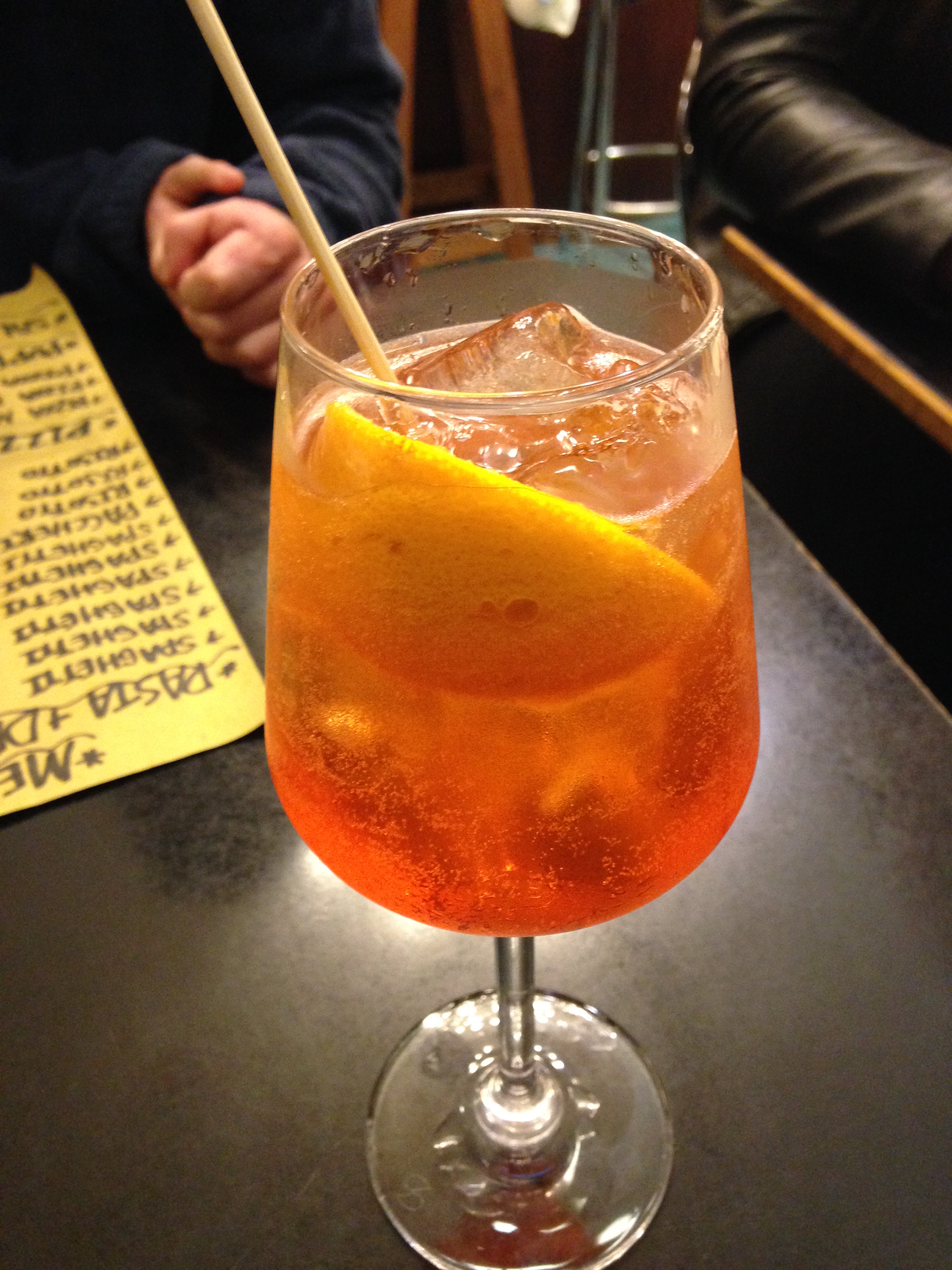
Generally running about 3 euros most places I went, the spritz (or Spritz Veneziano) originated in Venice in the 1800s, apparently based on the Austrian spritzer (i.e. ye olde wine spritzer). According to my good friend Wikipedia, the spritz was created when soldiers visiting Venice asked bartenders to spray some water into the wine to lower the alcohol content, since it was stronger than they were used to.
In modern times, the spritz is a combination of prosecco, a bitter liqueur (commonly Aperol or Campari), ice, and mineral water – garnished with an orange slice and olive.
I mostly stuck to the Aperol spritz and I thought it was lovely and much stronger than I usually expected (though it never tasted that way).
Things that surprised me
Some things that surprised me (because apparently, again, totally uncultured) were:
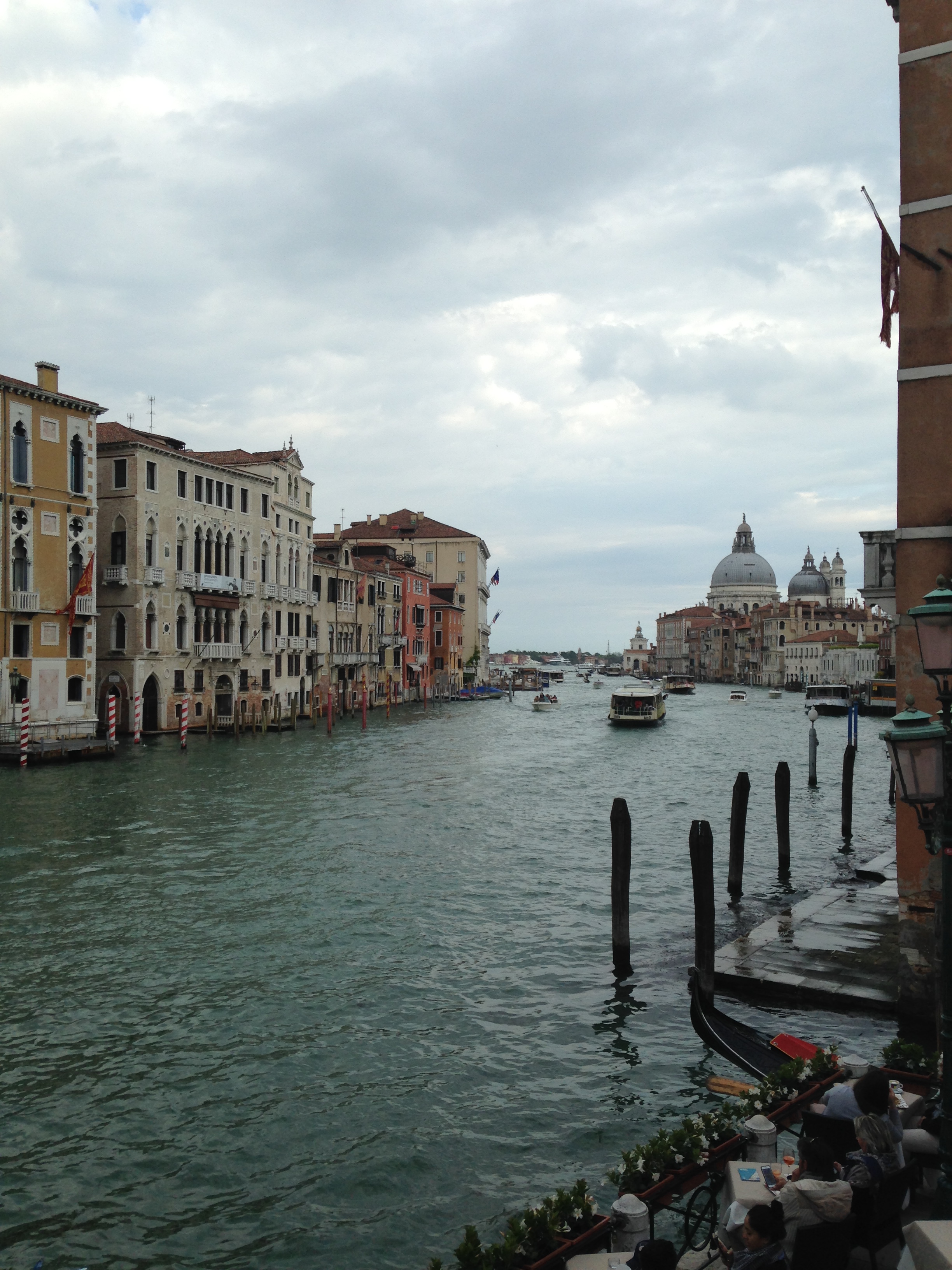
No cars. This totally should have been a no-brainer but the whole city is just pedestrian paths and canals because it wasn’t built for cars and there’s really no way to practically change that. You can get out to the islands by car or bus, but only at the nearest point. It did make for a great walking city experience (my favorite way to explore) and if you’re not feeling up for that you can take a boat!
No bikes. I think this is actually a more recent change, since people I talked to who went a few years ago said there used to be bikes on the islands. There were a lot of signs up explaining that bikes weren’t allowed, nor was sitting down on steps or curbs (something apparently enforced since I got shooed off a curb).
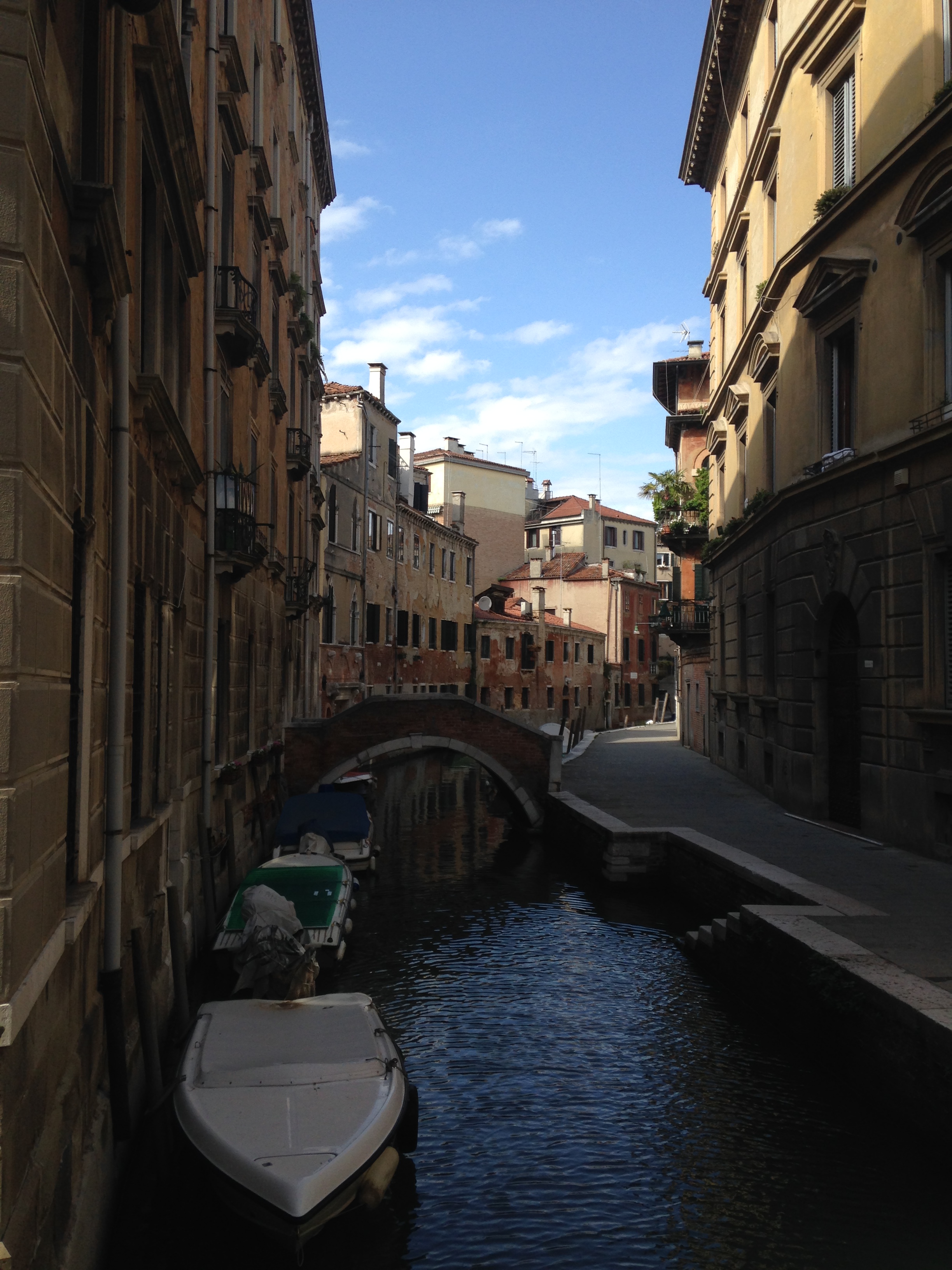
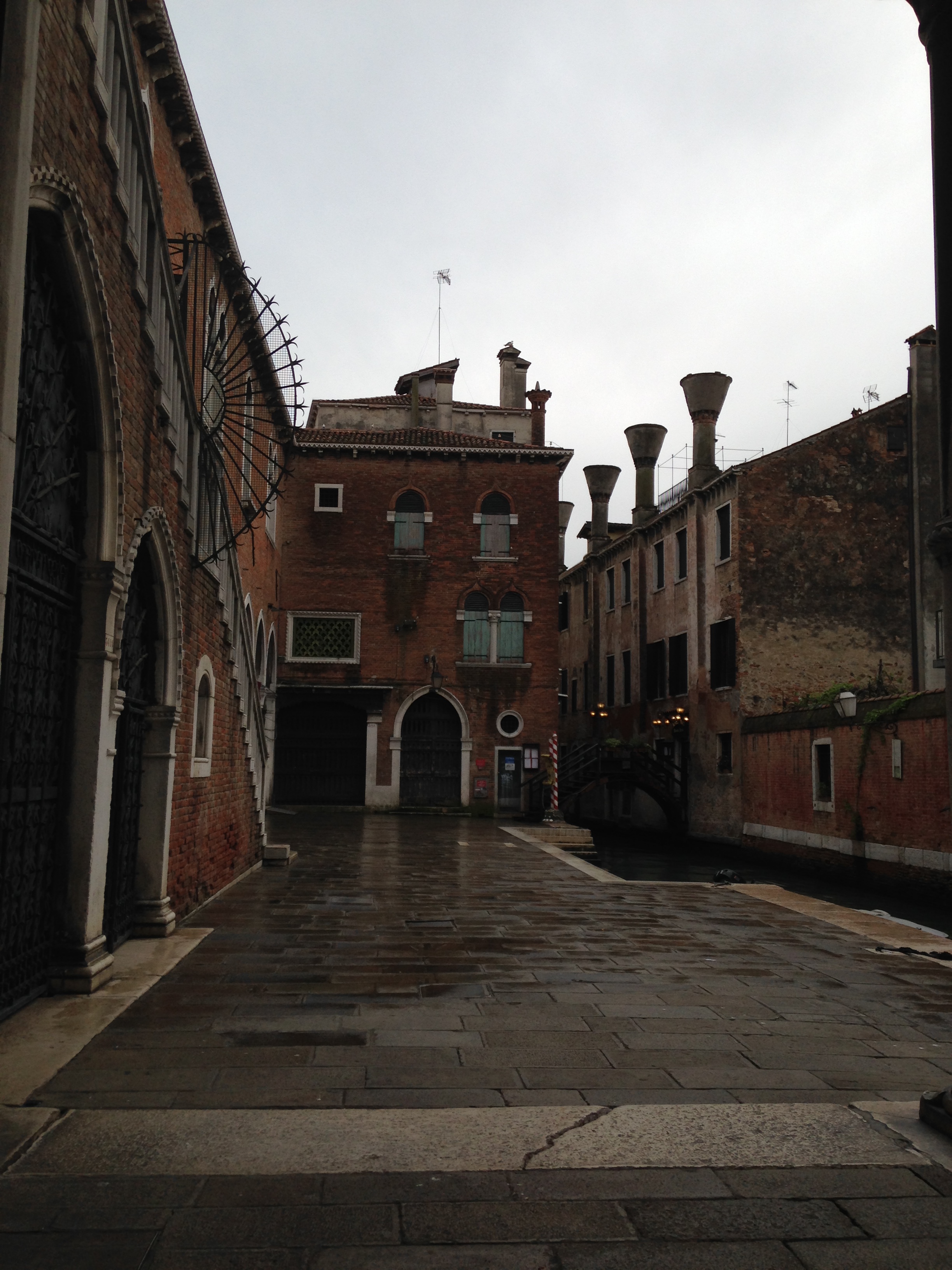
The sheer number of canals. I knew there were a lot of canals in Venice but, geez, there are a lot of canals. Venice was built on a marsh and you really do get the sensation of being right at water level. Really, just imagine taking the average older city with tiny winding streets and doing a find and replace all streets with canals (and cars with boats – down to garbage trucks and ambulances) and you’ve got Venice. It is littered with canals and honestly it was utterly charming. Also the canals don’t smell.
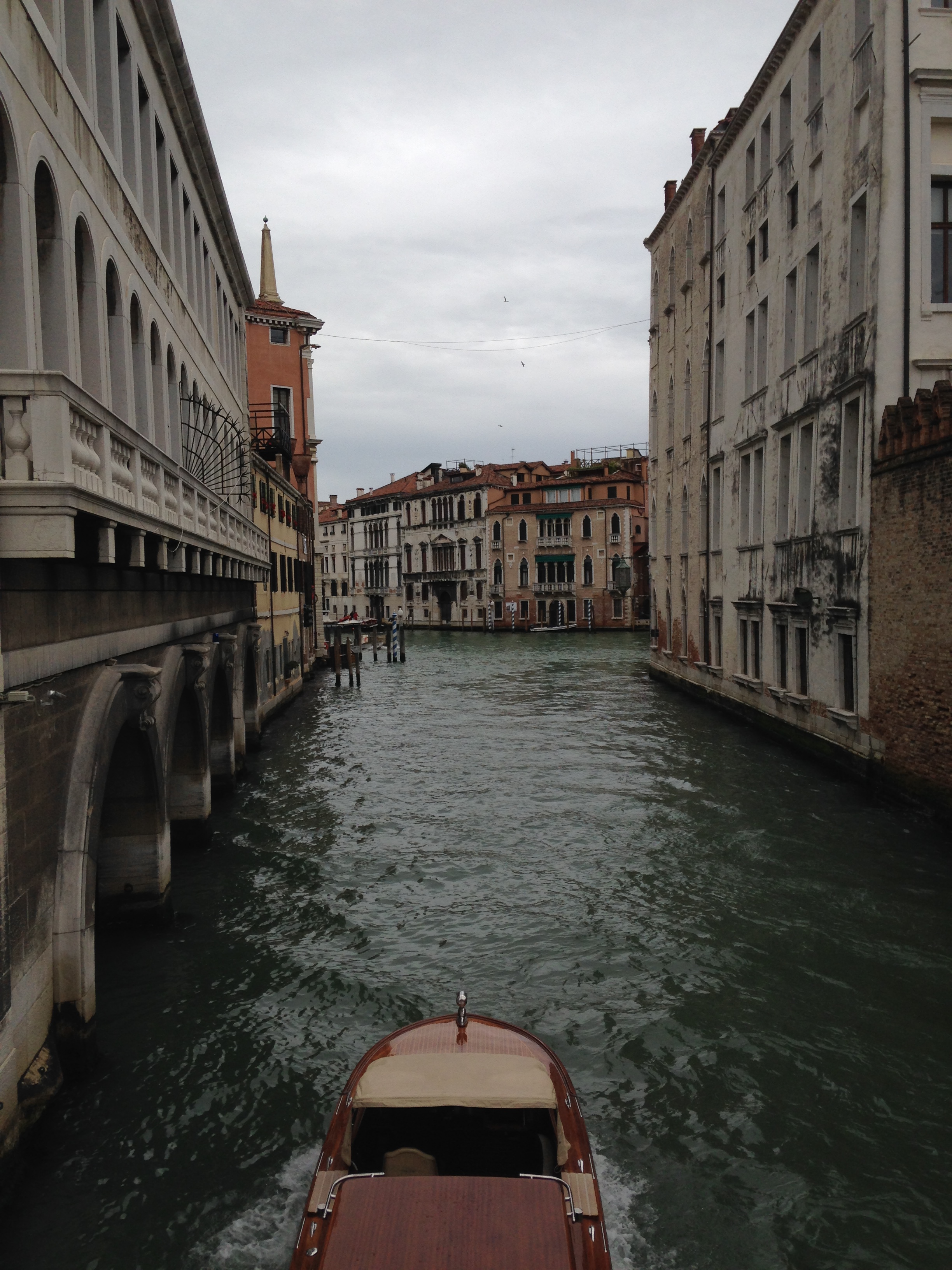
How much it lived up to the hype. Venice has always been billed to me as this romantically old city that’s almost frozen in the past because it’s so hard to change the buildings – and honestly it’s true. I recall being told (I believe in a Shakespeare class) that in Venice the buildings were built so closely that if you looked up, the buildings curved together at the top – also true. In the show Discovery of Witches (embarrassingly the deciding factor that led me to pick Venice over another city as my weekend trip), there are glossy expensive boats with men in suits who navigate through nearly hidden tunnels into the inner courtyards of their crumbling mansions – also very true and something that I saw frequently.
It is very cold and wet in May. Having been to Italy before and having access to Google Maps, you would think I would have realized that Venice was so far north. It is very far north. You can see the Alps from Venice. That being said, it wasn’t unpleasantly cold, just more than I was expecting and it was very wet, though apparently not so wet that they put out platforms on the flooded sidewalks, which apparently something that they do when it gets very bad. (This city is definitely sinking.) The nice thing about going on rainy weekend during the off-season was that it wasn’t swarmed by tourists so it was very comfortable getting around, except for the fact that my shoes got very soaked. You would also think I would have more water-resistant shoes for living in the PNW.
Recommendations
If you’re going to multiple further out islands (which you should), get a day pass. You can get 24 or 48 hour passes for the water buses and it is worth it, in part just so you don’t have to be fussing with ticketing to get on a boat. You can pick these up easily from any of the magazine stands around the city. I believe this is the one that I purchased and I seem to recall that it is 20 euros for 24 hours and 30 euros for 48 hours – I believe there’s a tier above that as well.
Get a museum pass. There are multiple museum passes but the one I purchased was the Musei Civici di Venizia, which includes most of the big museums (and some random smaller ones) on the main islands and some further out ones. It was a great deal at 35 euros (less if you’re under 26 or over 65), considering that admission to most of the museums is 15 euros a piece.
Stay in Venice. This was something I was debating because it is cheaper to stay on the mainland but I didn’t want to deal with needing to coordinate transport on and off the islands every day. I ended up finding an affordable hostel (Ostello S. Fosca) that worked out well and was an easy walk to the bus station. I considered staying on Giudecca (at the Generator hostel, which I had recommended to me by a friend), but the island is also only accessible by boat, and I wanted to be able to walk to the bus station in case I needed to leave at an odd time.
Go to Burano, Murano, and San Giorgio. I didn’t get to go to Lido, which was also on my list, but Burano, Murano, and San Giorgio were all lovely and taking the boat out to the islands was a great experience in itself! When you go further out on the boats, you realize just how many tiny little islands there are sprinkled around – many with nothing on them or just a single (usually dilapidated) house. Murano is known for its glass, Burano for its lace (and adorably colored houses), and San Giorgio was just a really adorable island that (at least when I was there) was filled with free art exhibits.
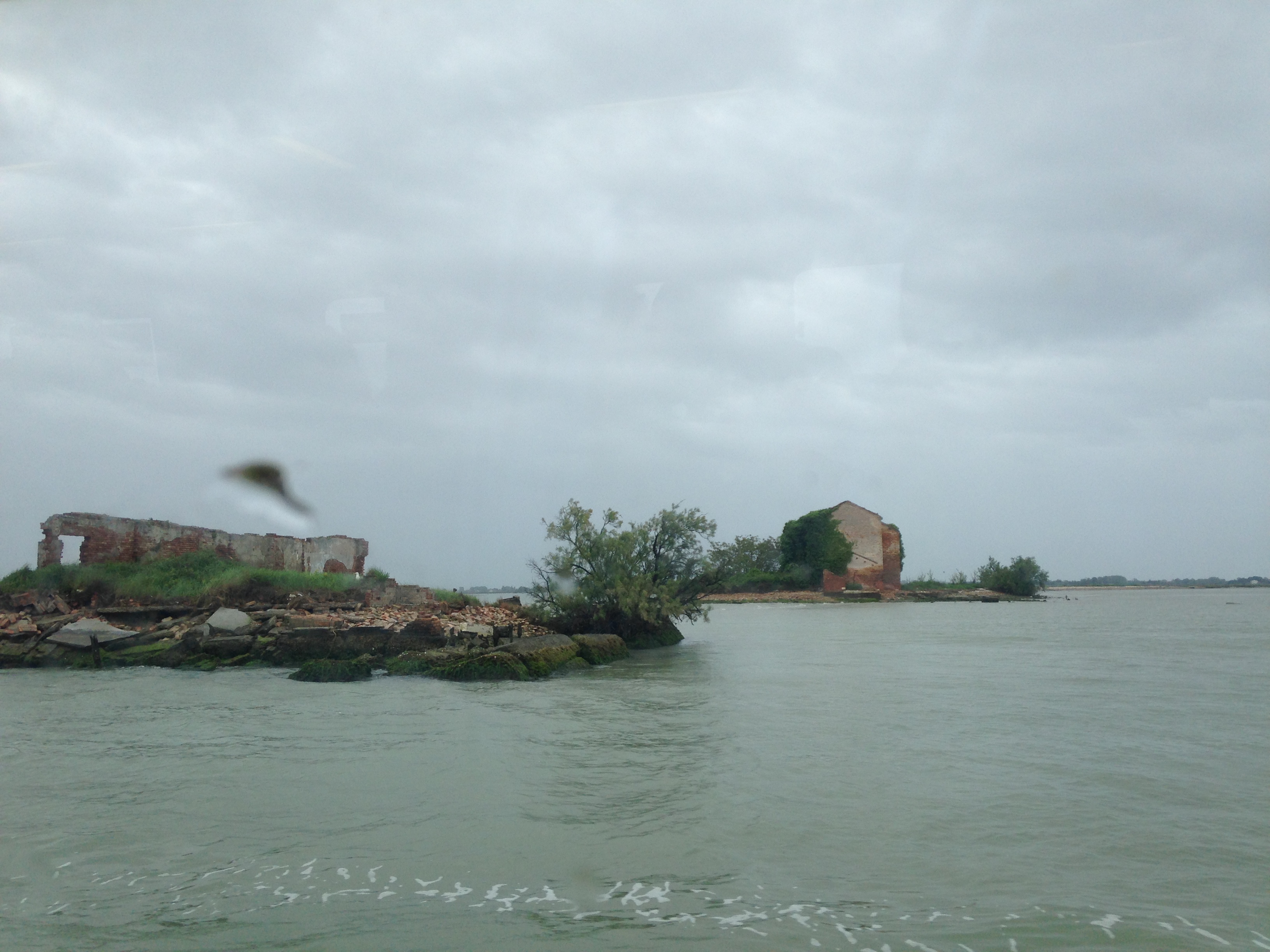
Islands 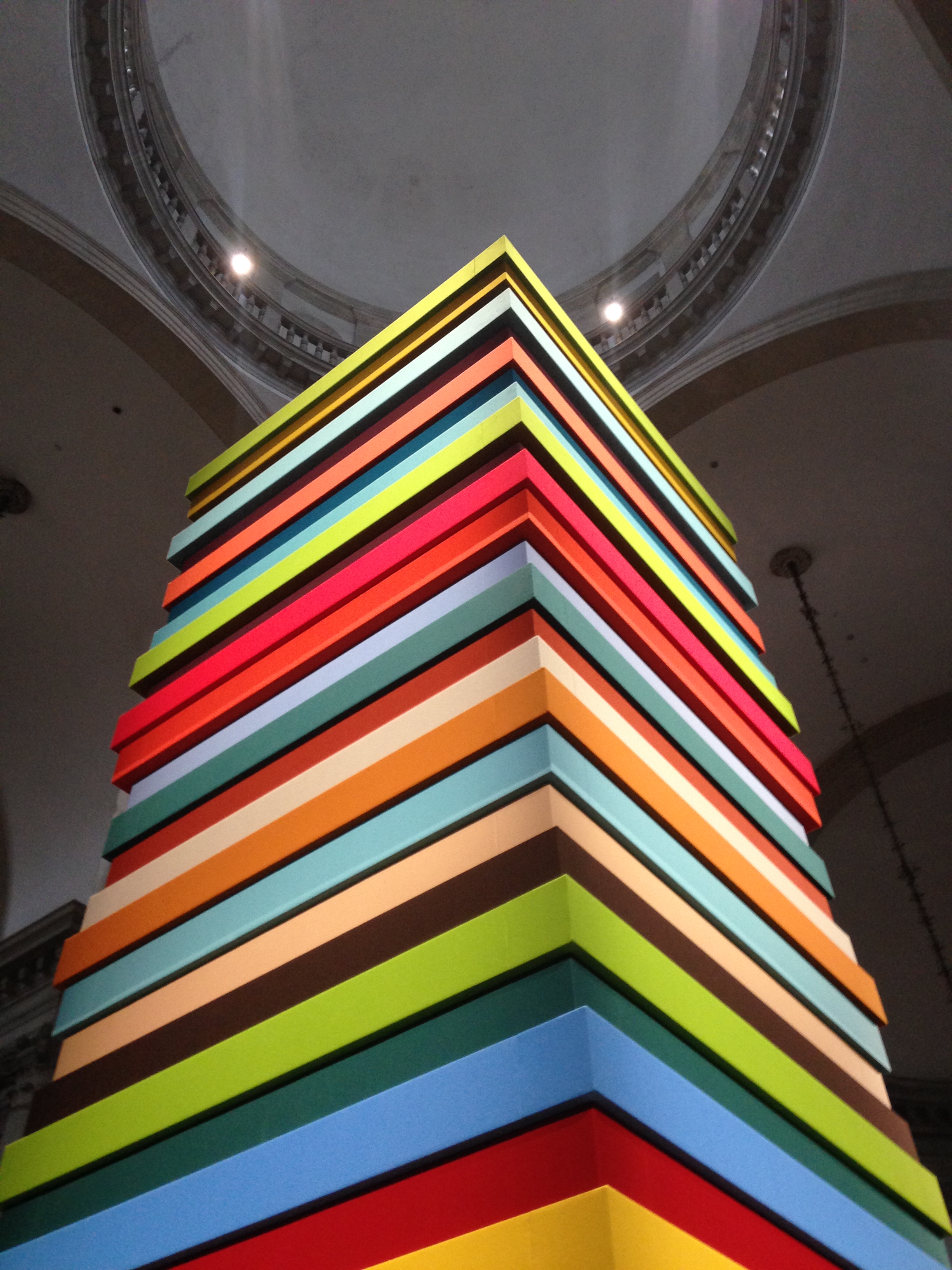
Art installation in San Giorgio Maggiore 
Extremely weird (and only PG) picture of video playing in art gallery on San Giorgio 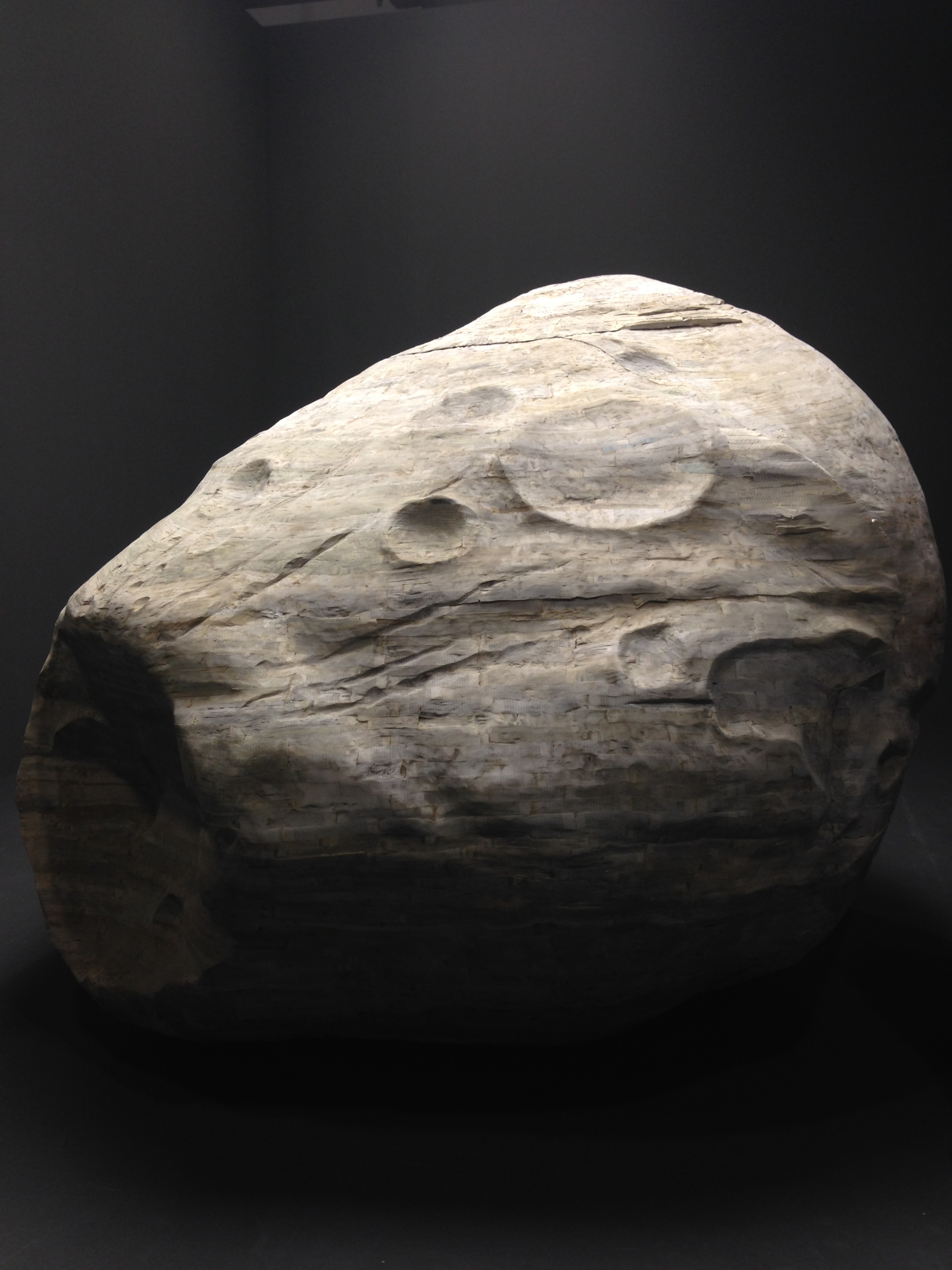
Piece in gallery on San Giorgio – “rock” made of pressed books 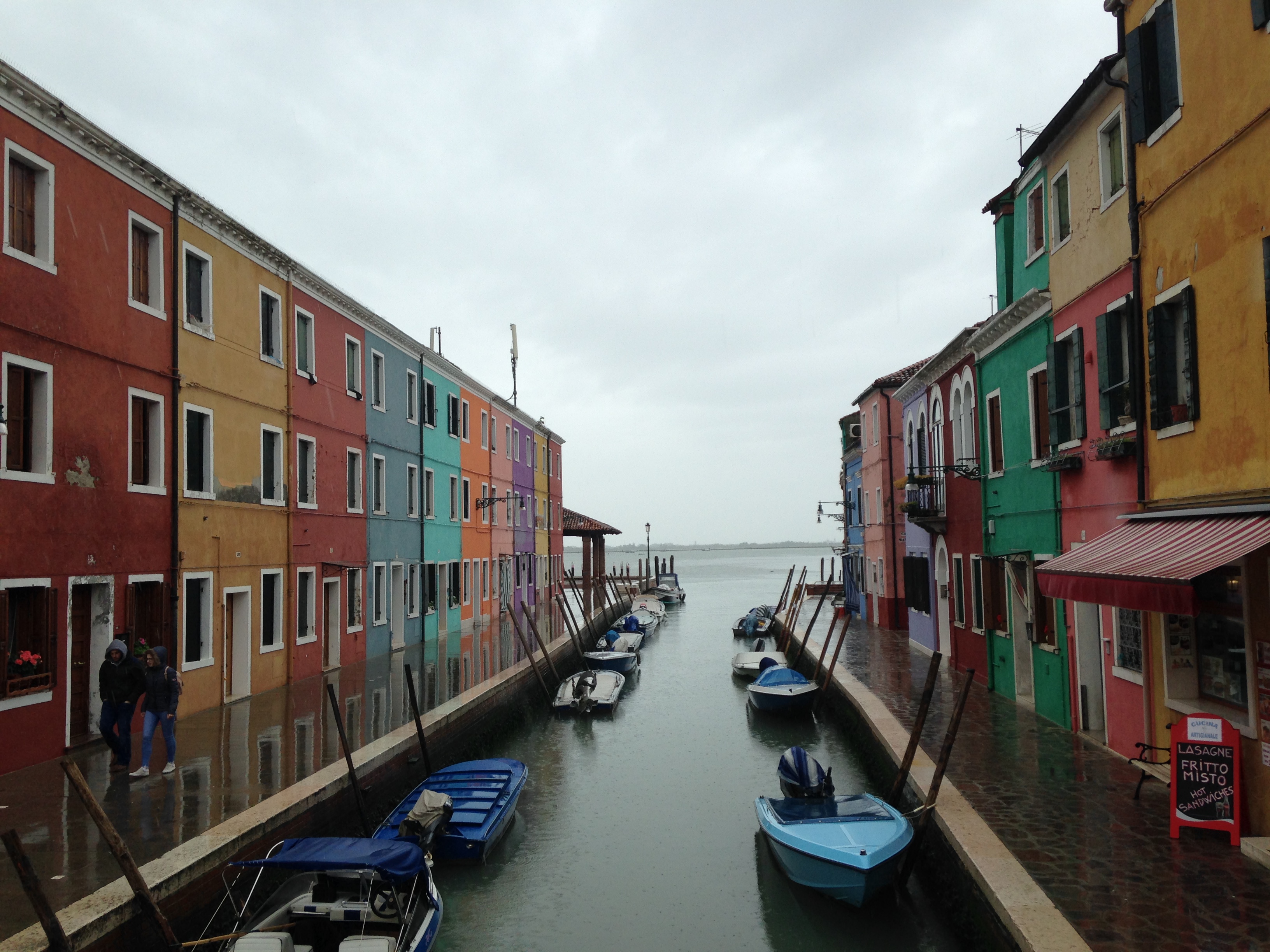
Burano
See the view from T Fondaco. You can sign up for free online to see the view from this extremely swanky Venetian mall, plus the inside is pretty cool too.
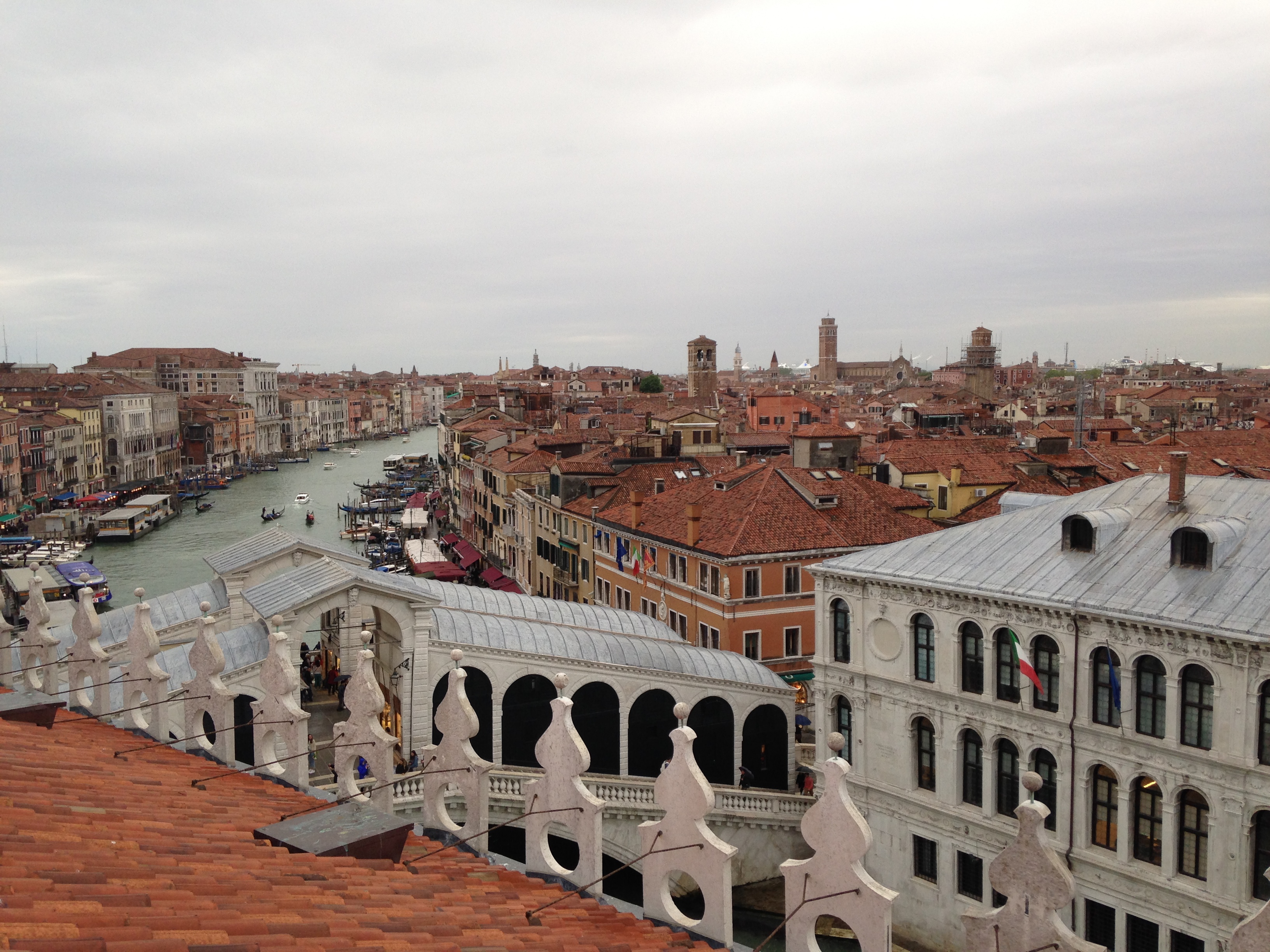
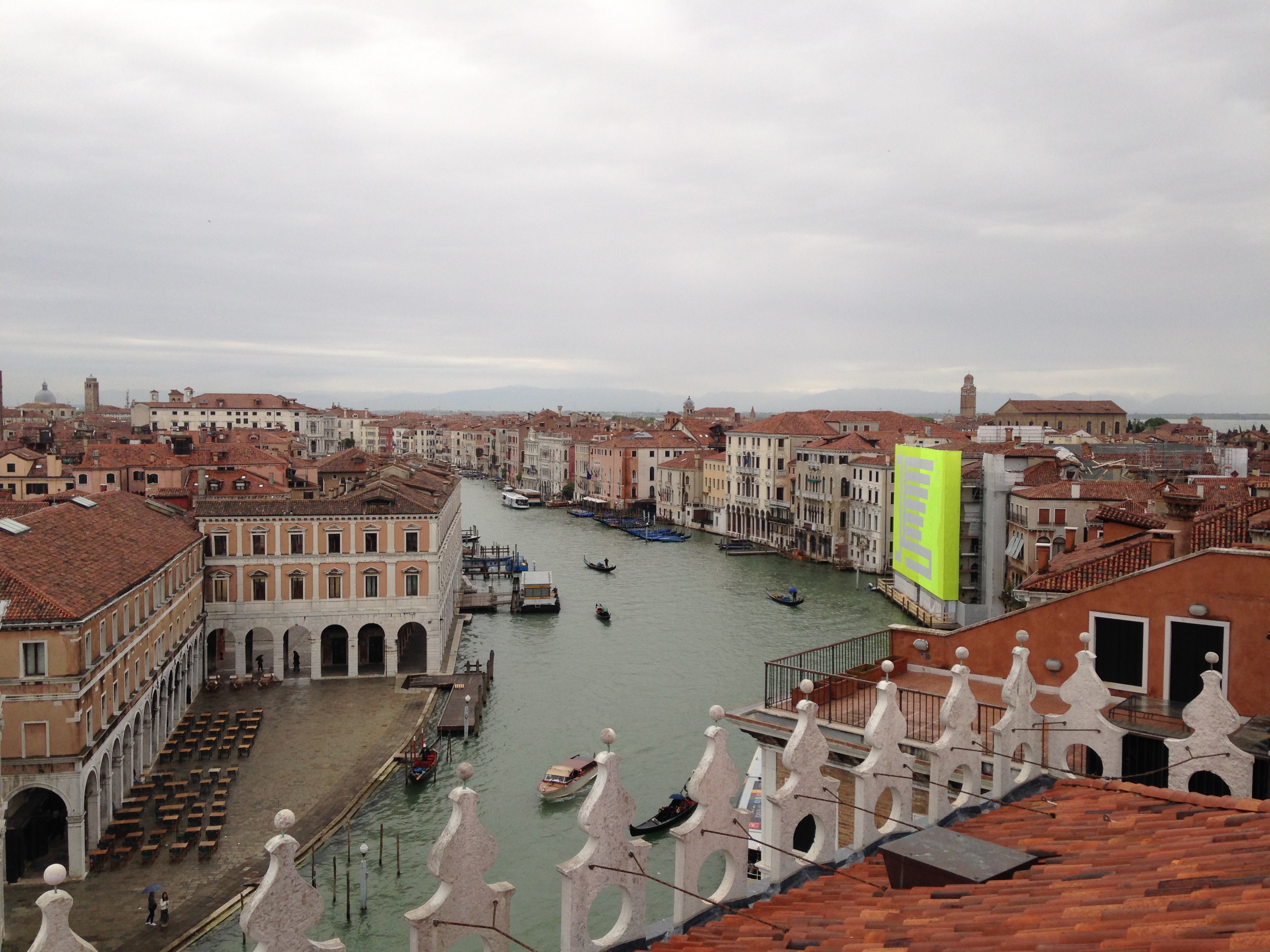
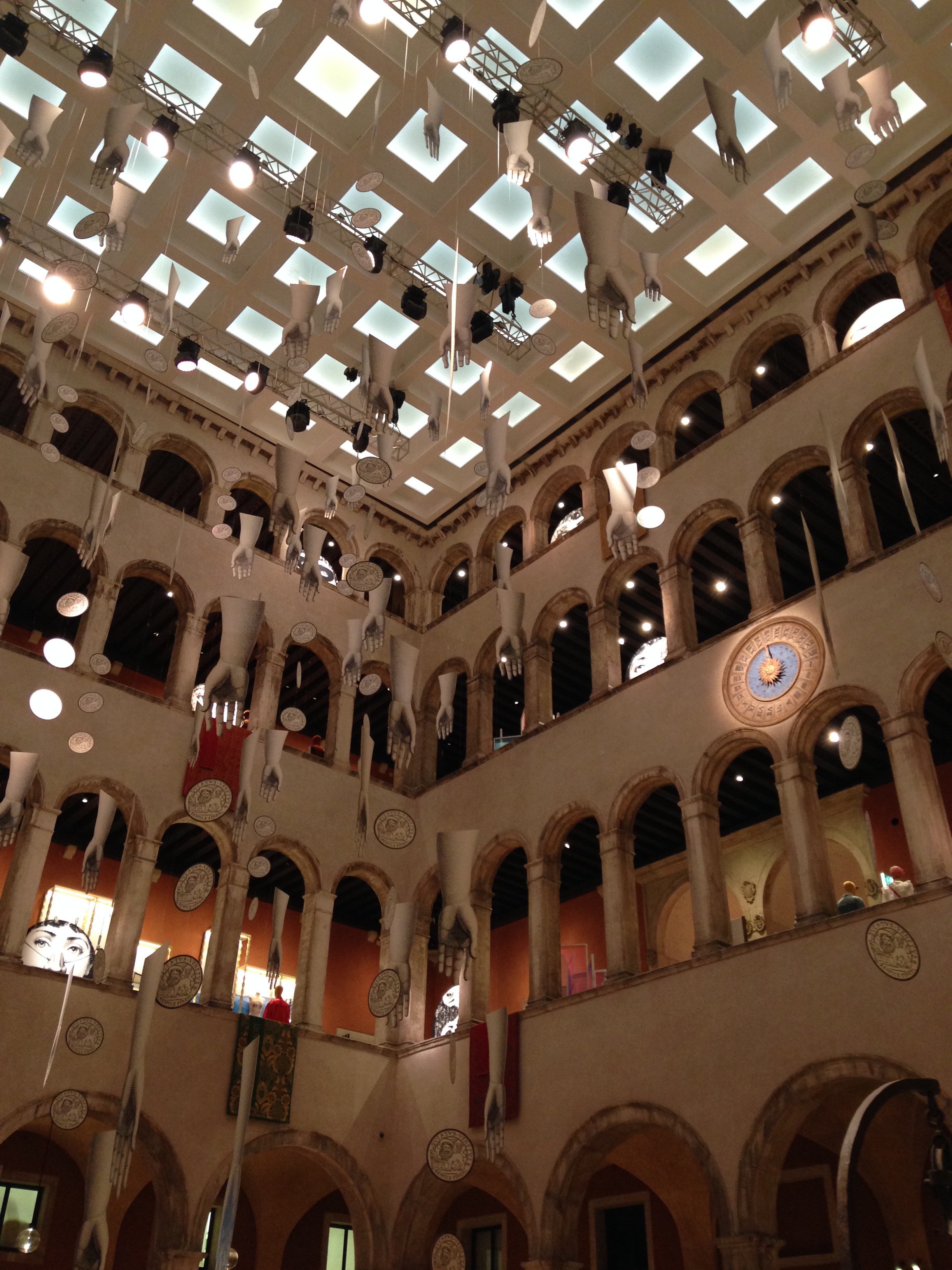
Inside T Fondaco
Example Budget
This didn’t end up being a very expensive excursion and I would roughly calculate my expenses as follows for my 3 day trip.
- Airfare: $250 (one way, from Brussels)
- Lodging: $40/night
- Food: $20/day (though I’m very cheap and mostly just ate pizza and pastries)
- Transportation: $30
- Museum Pass: $40
- Total: $500
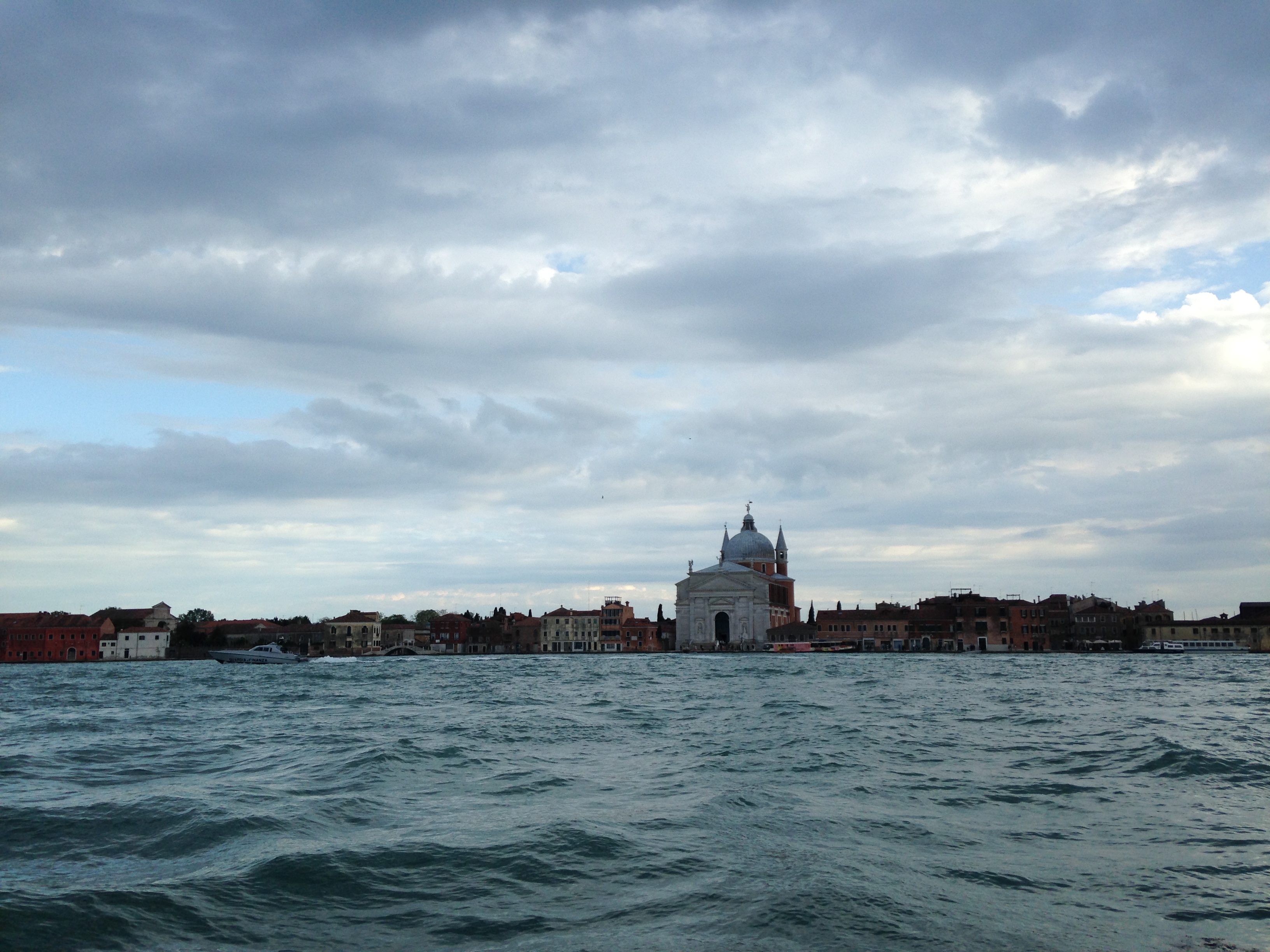
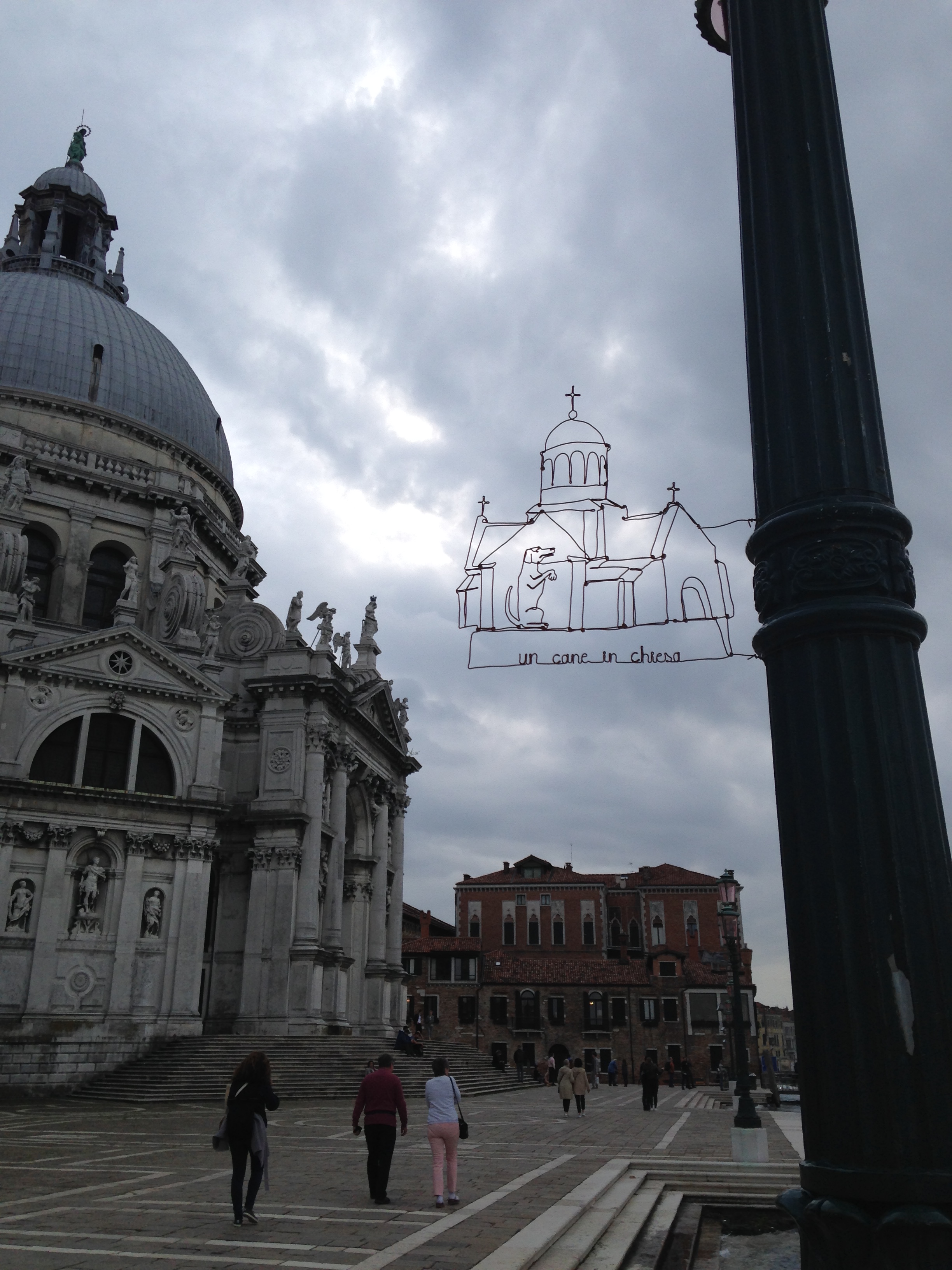
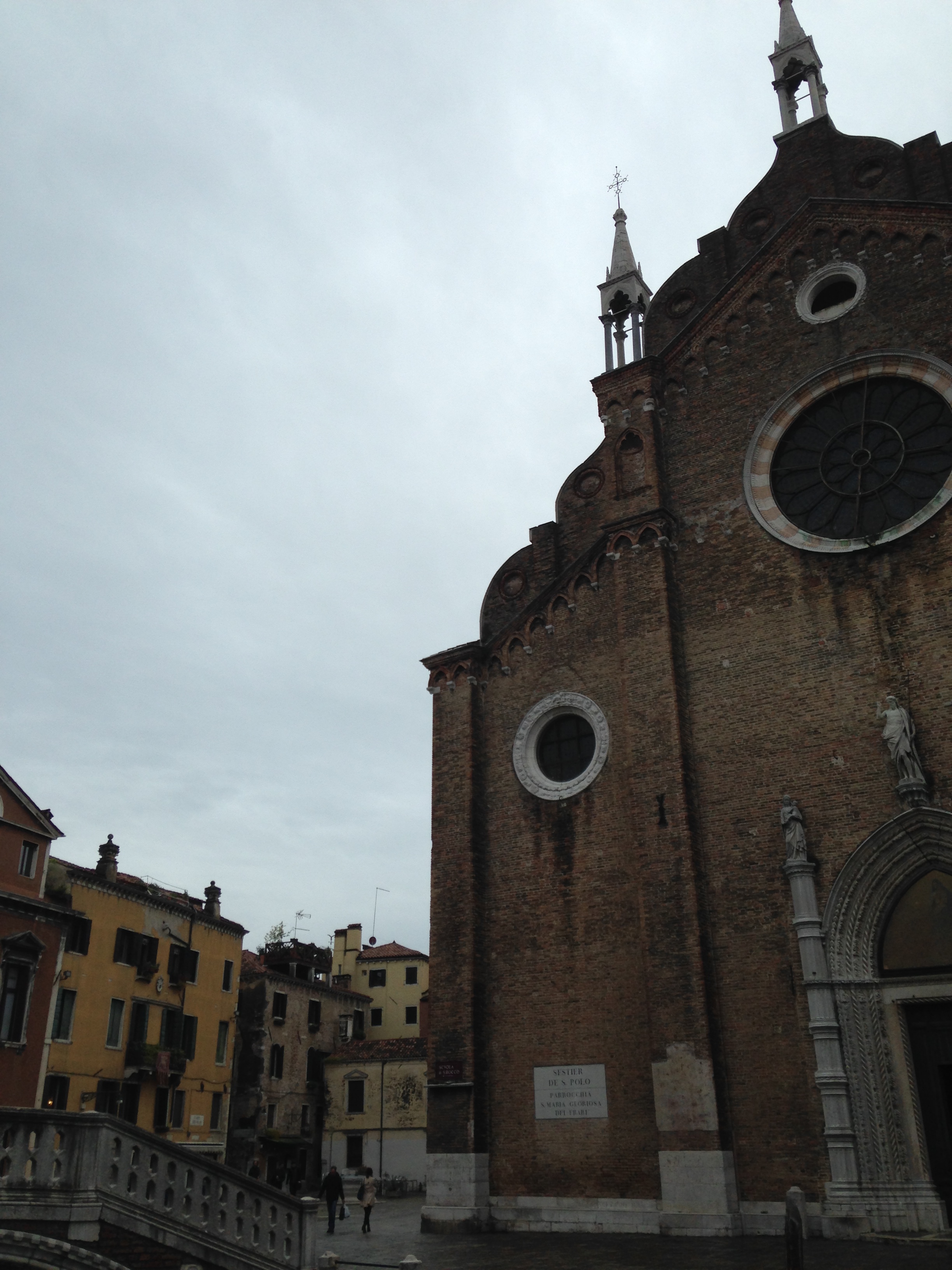
In conclusion, definitely visit Venice and here are some more pictures.
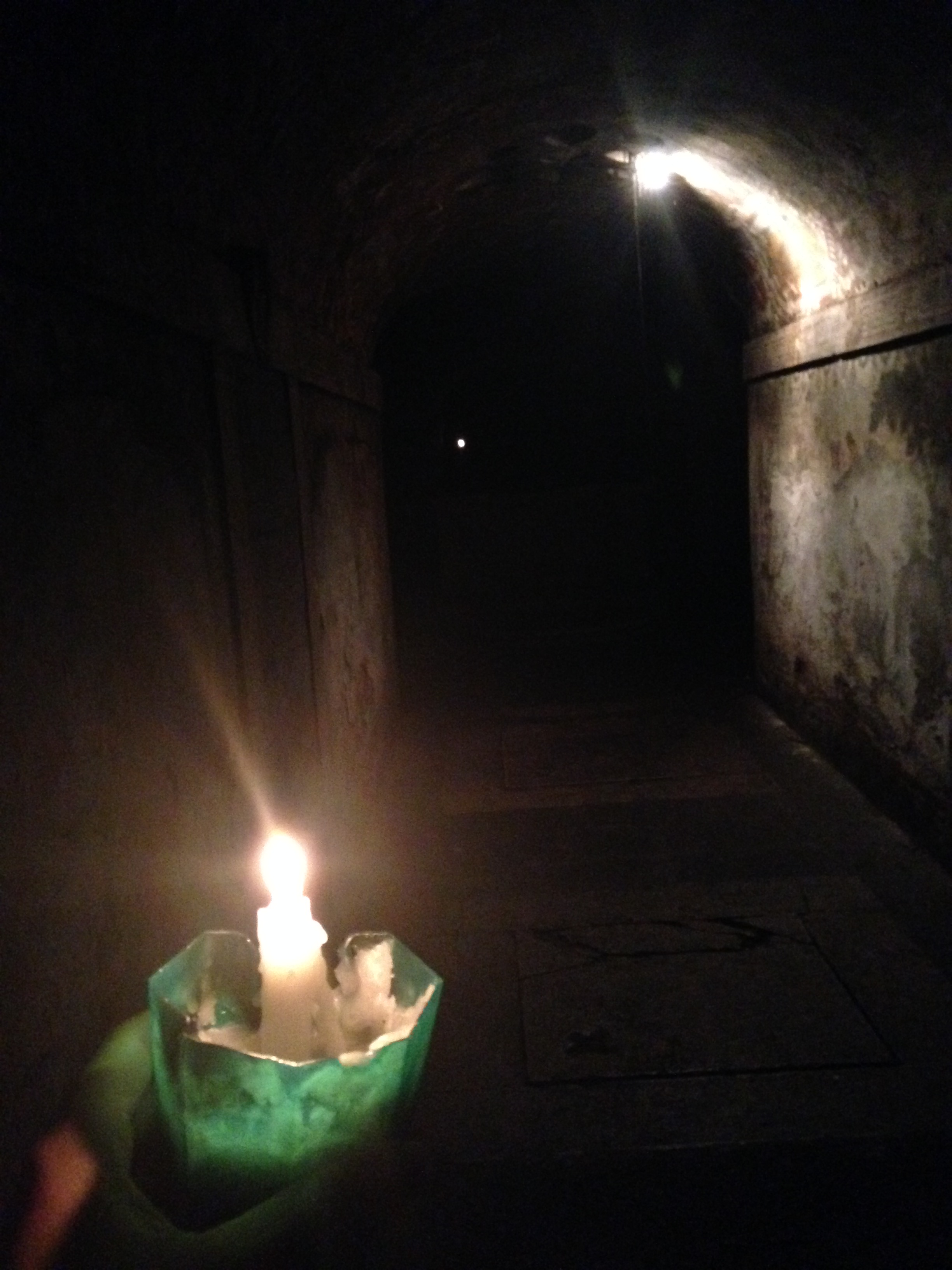
I wandered into a church and was directed into their crypt with just this candle and this one single bulb and it was terrifying. 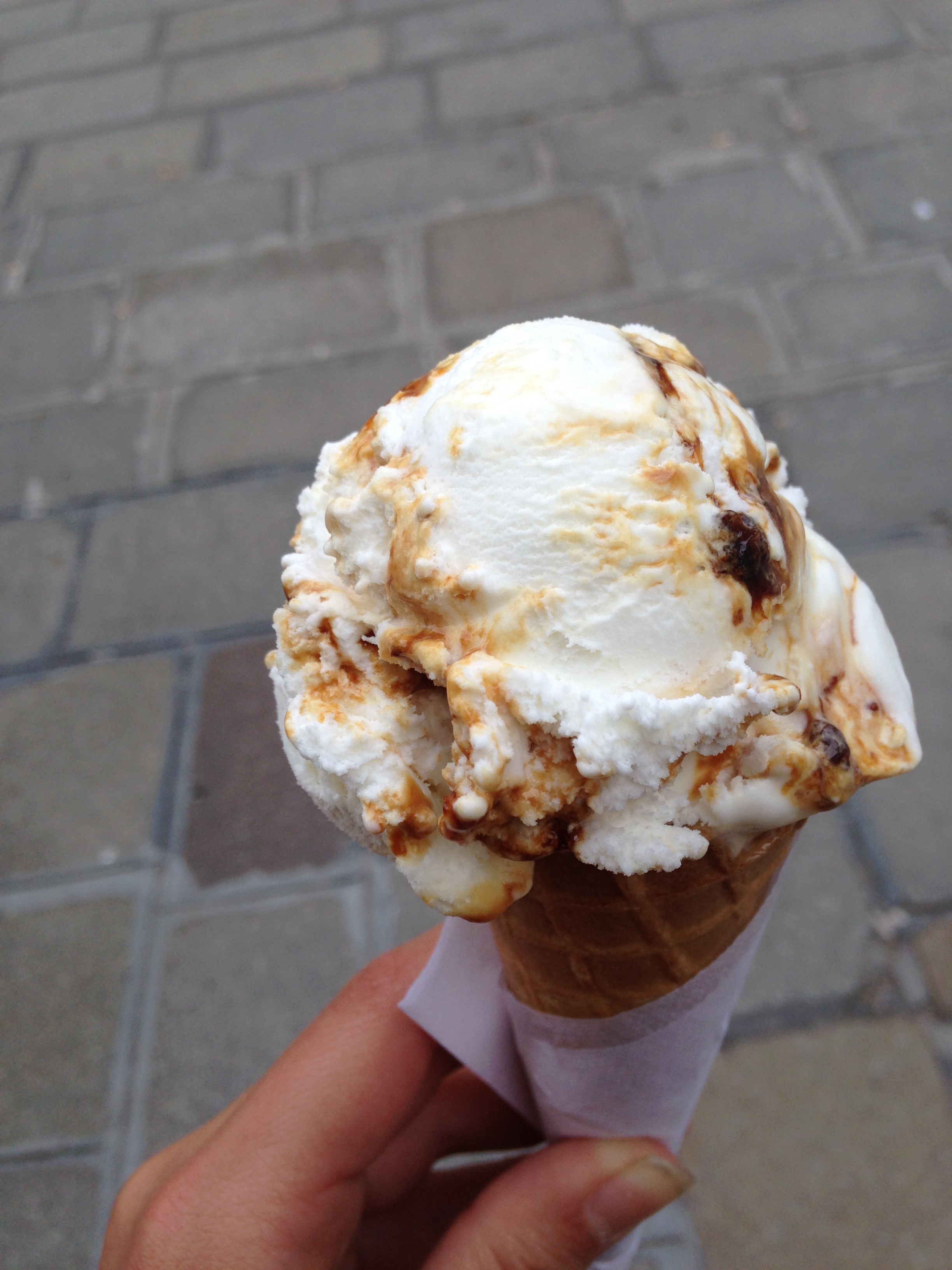

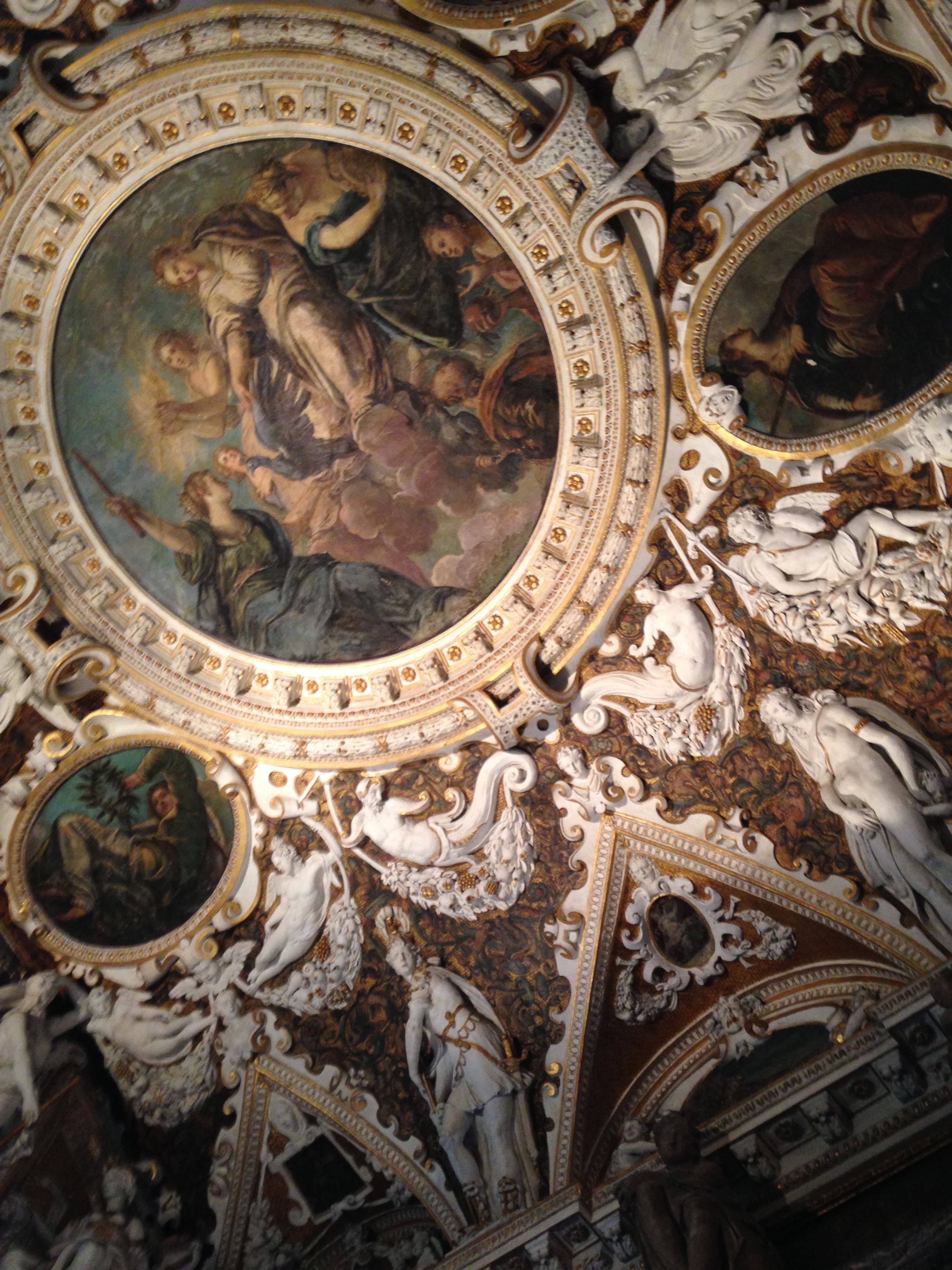
Inside the Ducal Palace 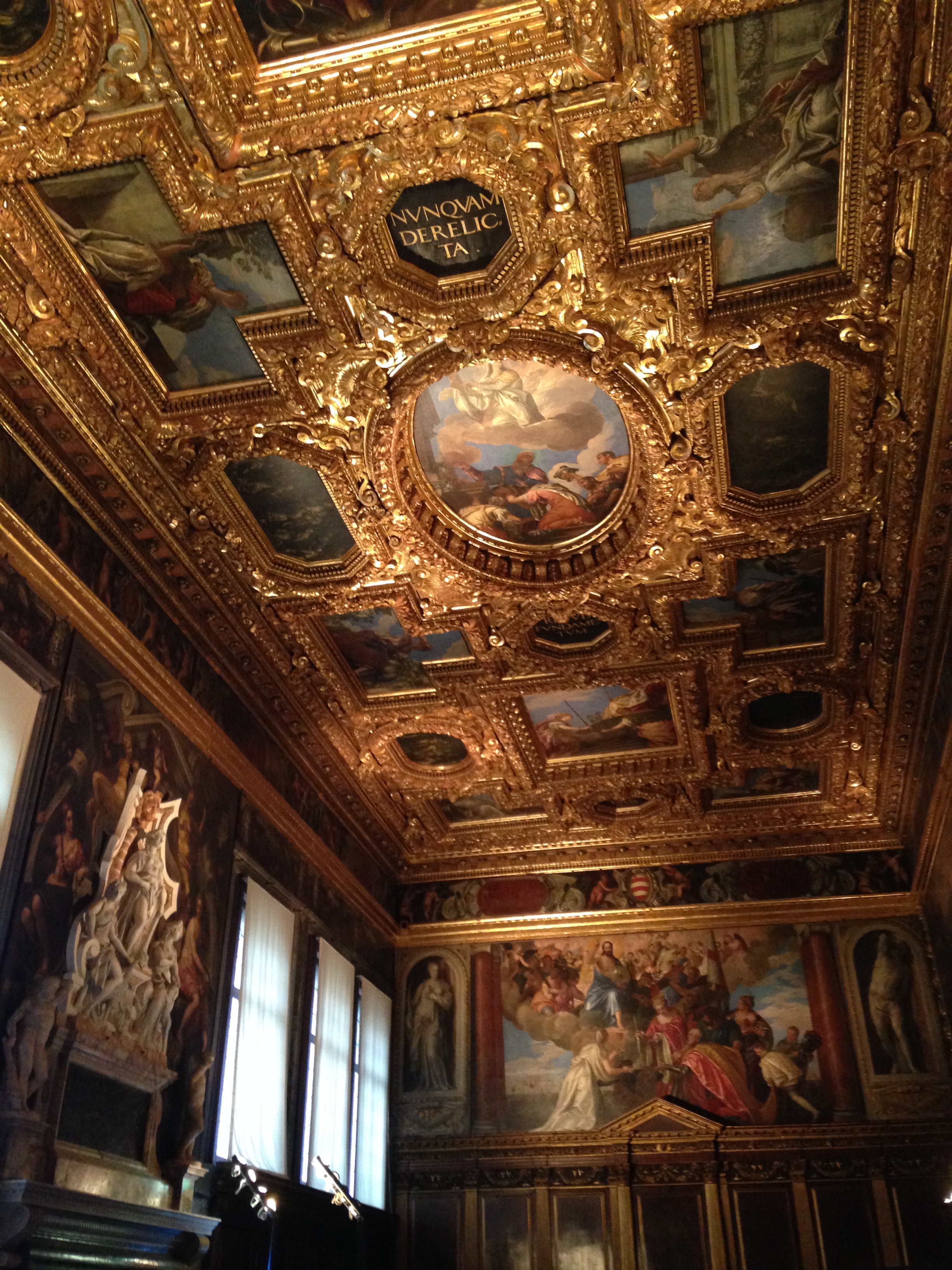
Inside the Ducal Palace 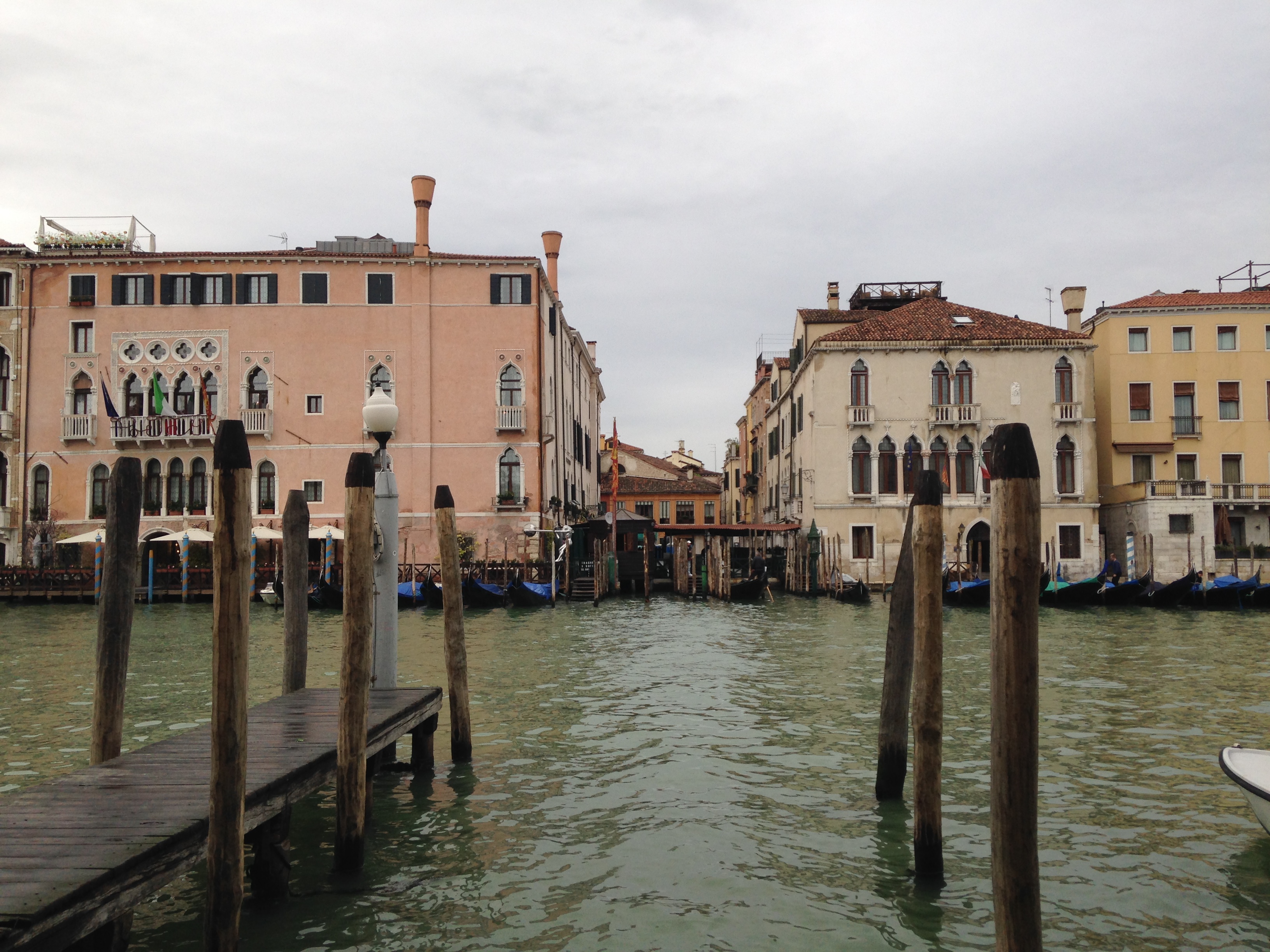
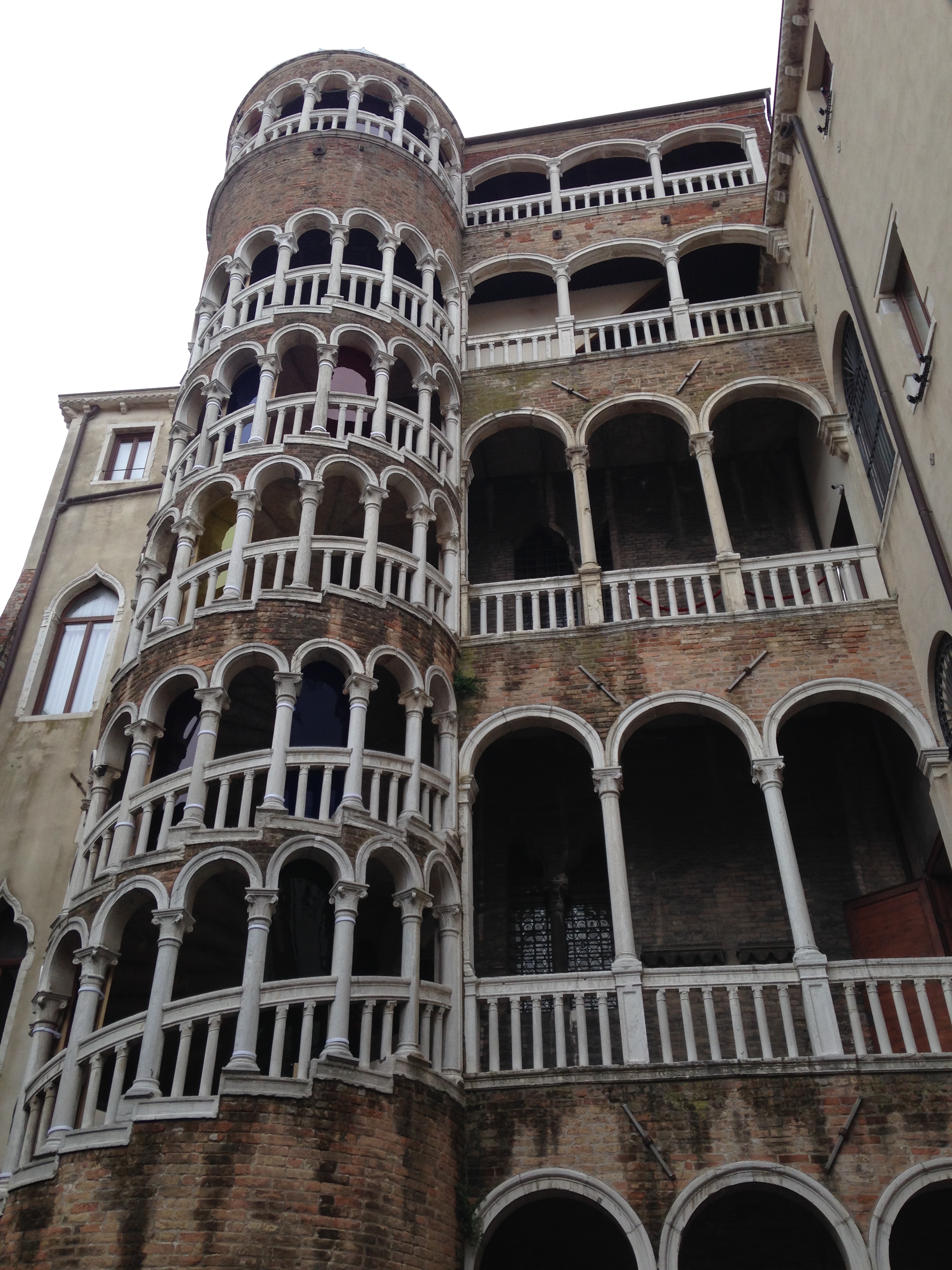
Scala Contarini del Bovolo 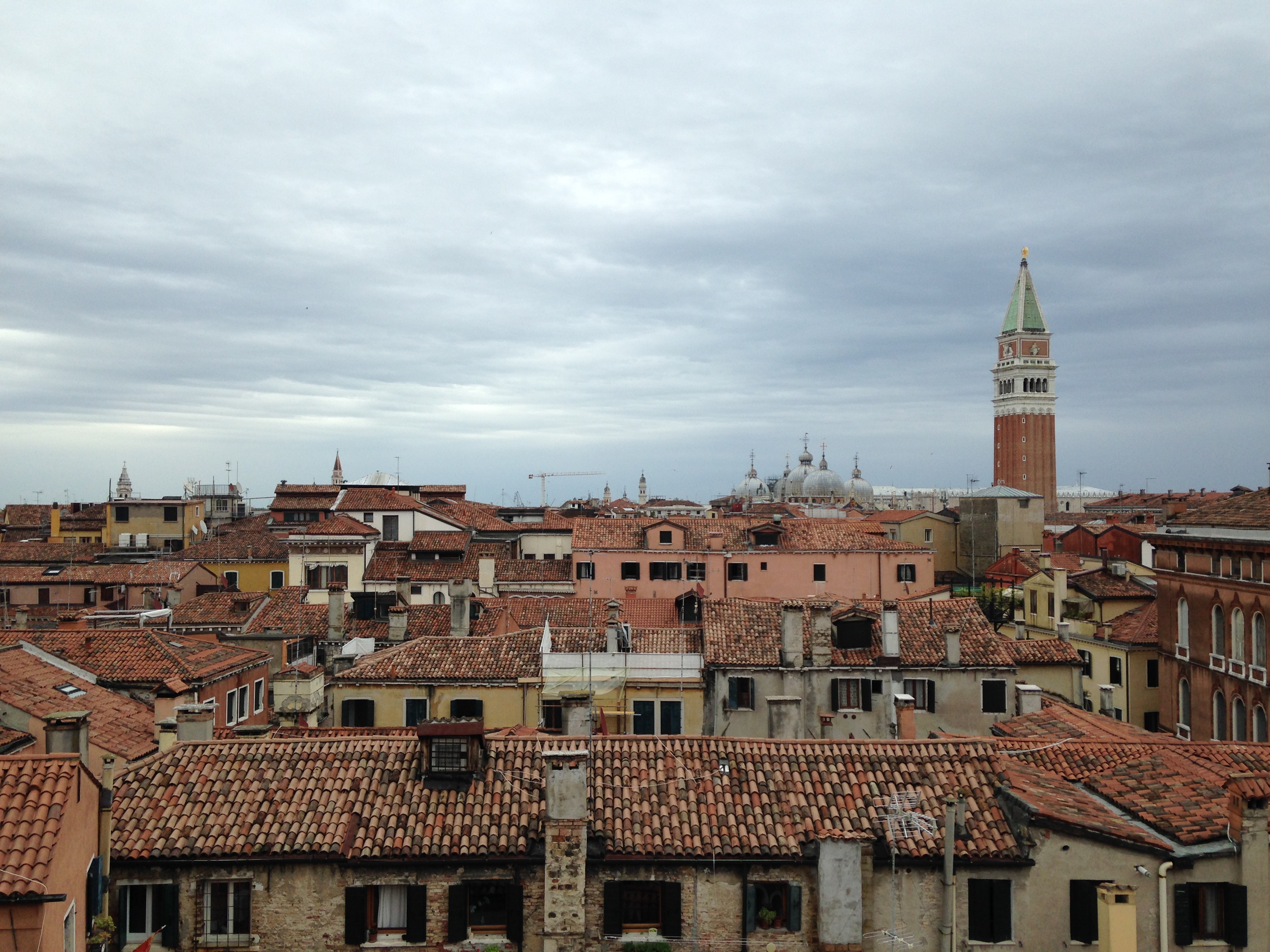
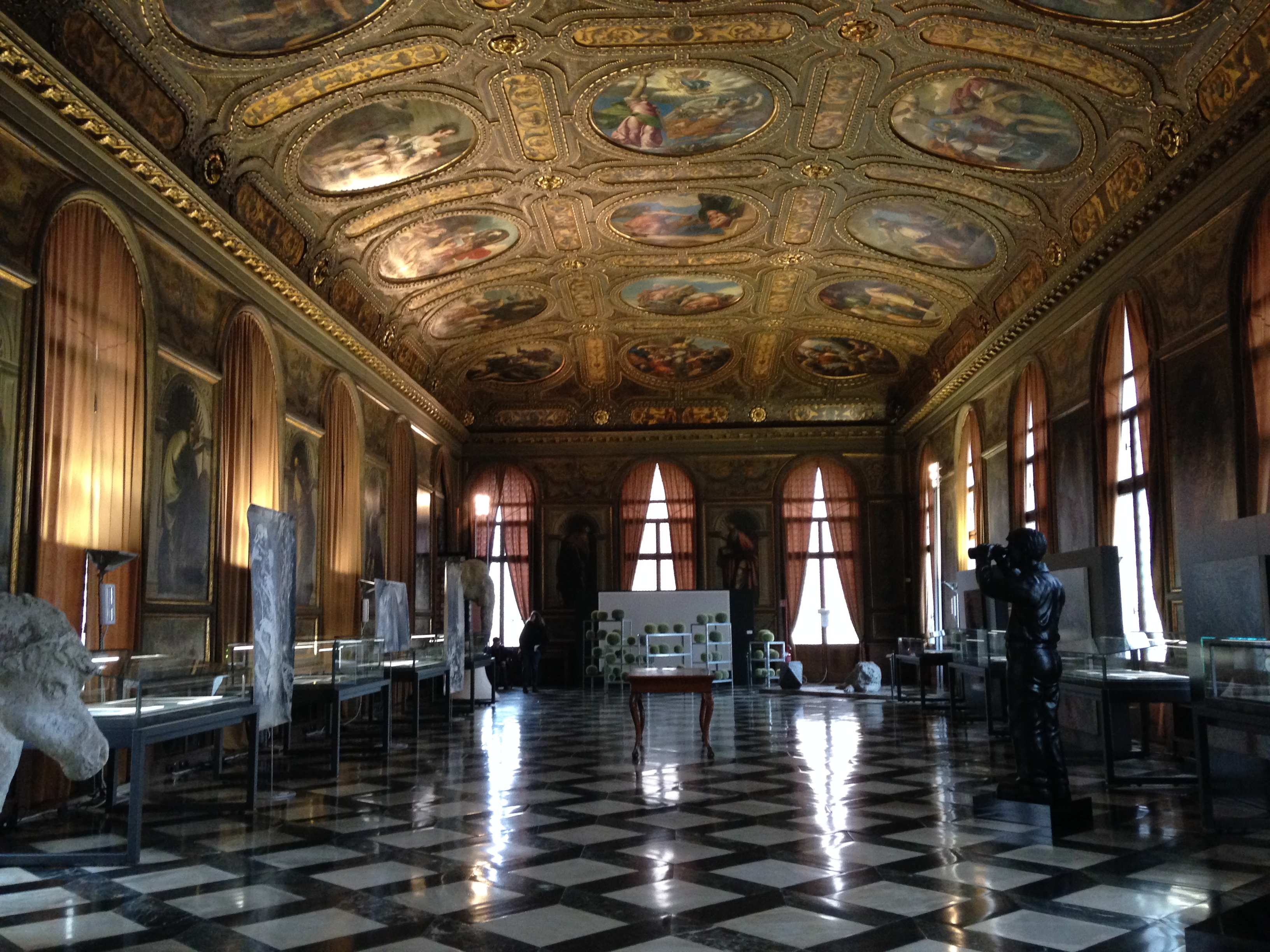
Inside Museo Correr – there’s a large number of cacti against the wall 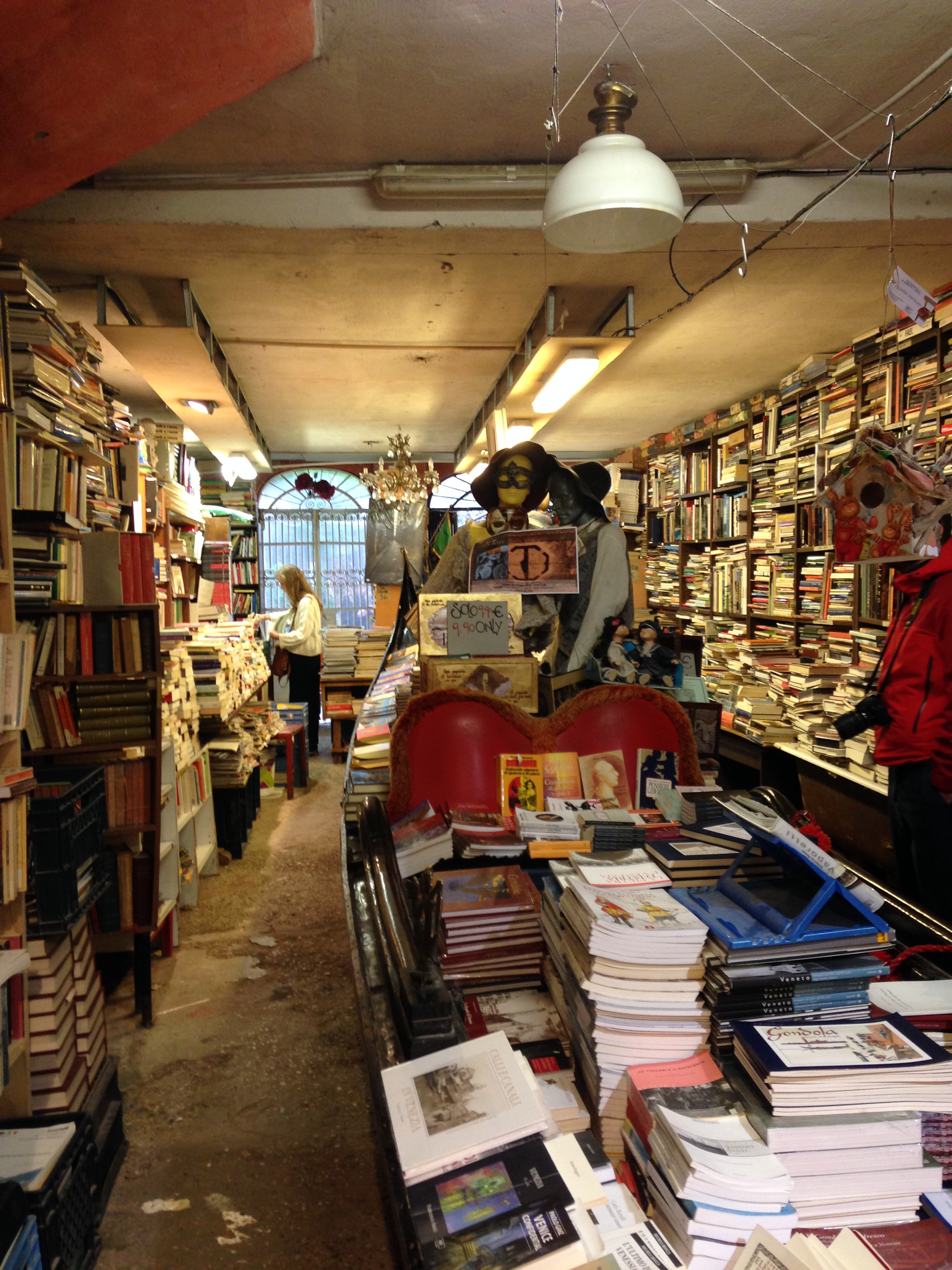
Libreria Acqua Alta 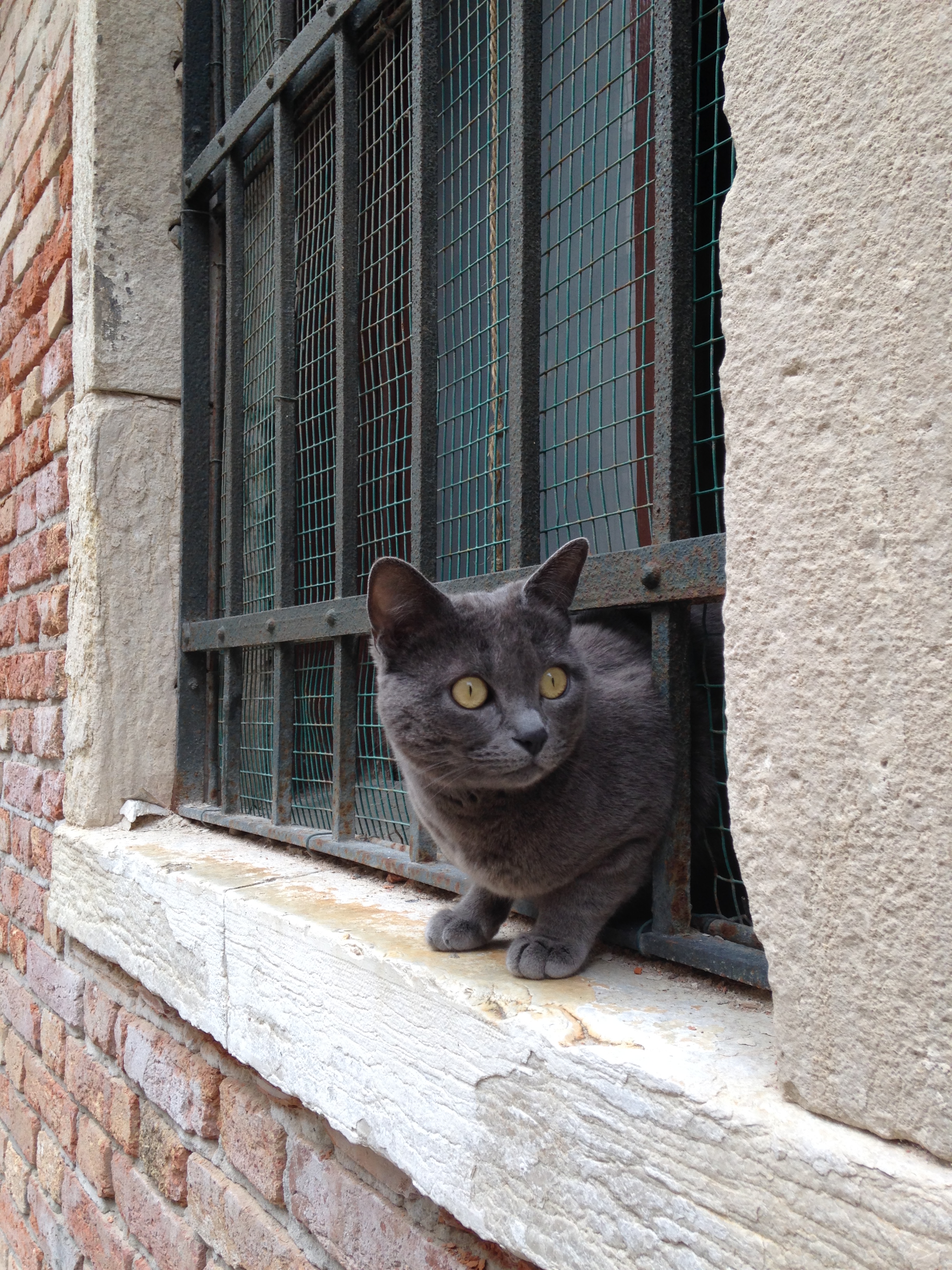
I took 20 pictures of this cat – it is literally half sticking out of this tiny window and was really wired
 Fun-sized: A Travel and Life Blog