Since I’m in grizzly country this week, I did a bit of research on how to stay safe around bears and thought I would share it here! In Washington, we generally just have black bears, which you deal with differently in potentially dangerous situations. Hopefully, this is helpful! For this post, I used information from PBS and the National Park Services and paraphrased and summarized in part.
Types of Bears
- Black Bears: Medium-sized omnivores primarily found in the Pacific Northwest, Rockies, East Coast, and Canada.
- Brown Bears: Large omnivore found across Eurasia and North America.
- Grizzly Bears: Subset of brown bear, also known as North American brown bear. Fewer than 1,100 grizzlies exist in the lower 48 states, with 500 to 600 grizzlies in the Greater Yellowstone area.
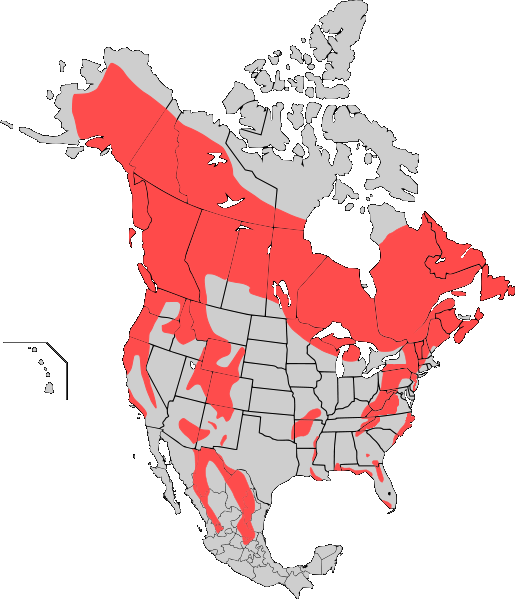
American Black Bear Distribution, from Wikipedia 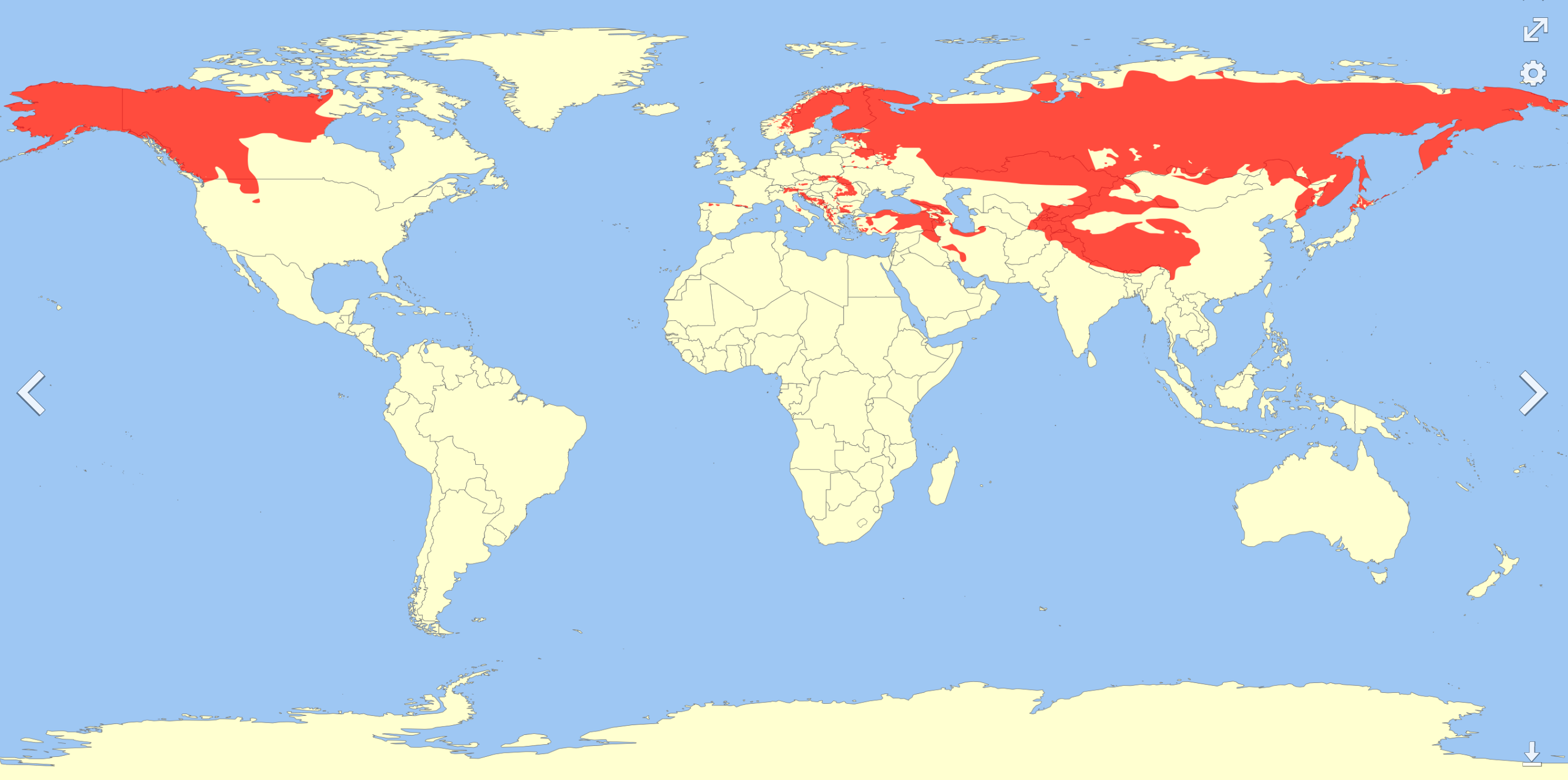
Brown Bear Distribution, from Wikipedia 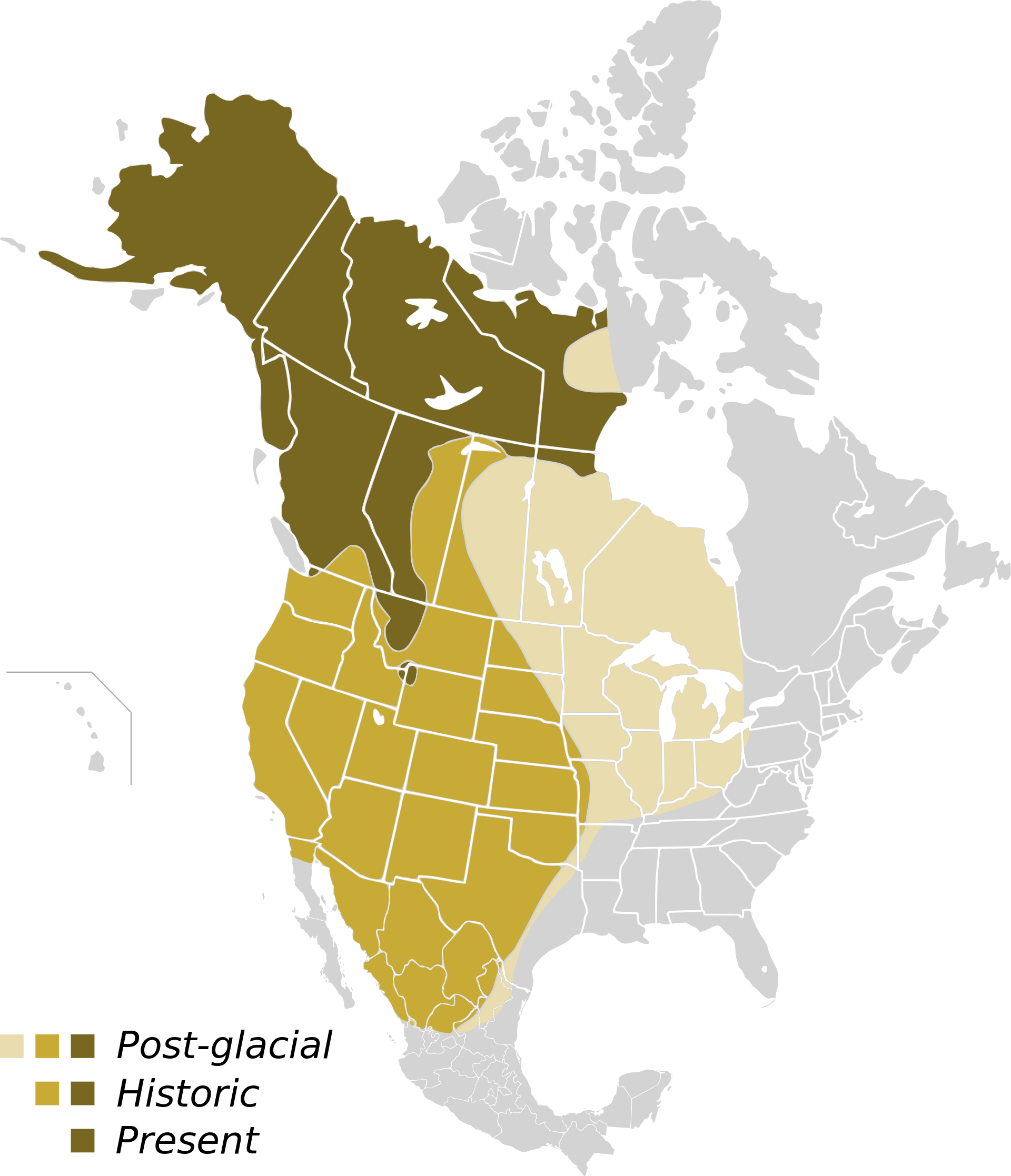
Grizzly Bear Distribution, from Wikipedia
Avoiding Bear Encounters
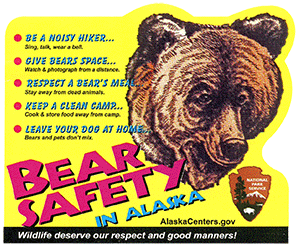
- Be a noisy hiker. Sing, talk, wear a bell.
- Hike and travel in groups.
- Give bears space. Watch and photograph from a distance.
- Respect a bear’s meal. Stay away from dead animals.
- Keep a clean camp. Cook and store food away from camp – either by hanging food from trees or by using a bear canister. See the recommendations of the area you are staying in at a ranger’s station.
- Don’t bring dogs.
Bear Encounter
- Identify yourself as a human by talking calmly in low tones and slowly waving your arms while standing standing your ground. The bear may come closer or stand on its hind legs to get a better look or smell. A standing bear is usually curious, not threatening.
- Do NOT scream, imitate bear sounds, or make sudden movements.
- Avoid eye contact.
- Pick up small children immediately.
- Do NOT allow the bear access to your food.
- Do NOT drop your pack as it can provide protection for your back.
- If the bear is stationary, move away slowly and sideways.
- Do NOT run (you cannot outrun the bear), but if the bear follows, stop and hold your ground.
- Do NOT climb a tree. Both grizzlies and black bears can climb trees.
- Be especially cautious if you see a female with cubs; never place yourself between a mother and her cub, and never attempt to approach them.
Bear Attacks
Most bears do not want to attack you; they usually just want to be left alone. Bears may bluff their way out of an encounter by charging and then turning away at the last second or react defensively by woofing, yawning, salivating, growling, snapping their jaws, and laying their ears back.
If a bear charges you, stand your ground and use bear spray when the bear is within 25 ft. Only use the spray if the bear is charging – otherwise it will not be effective and will just enrage the bear.
If any bear attacks you in your tent, or stalks you and then attacks, do NOT play dead—fight back! This kind of attack is very rare, but is serious as the bear sees you as prey.
- Brown/Grizzly Bears: If you are attacked by a brown/grizzly bear, leave your pack on and PLAY DEAD. Lay flat on your stomach with your hands clasped behind your neck. Spread your legs to make it harder for the bear to turn you over. Remain still until the bear leaves the area. Fighting back usually increases the intensity of such attacks. However, if the attack persists, fight back vigorously. Use whatever you have at hand to hit the bear in the face.
- Black Bears: If you are attacked by a black bear, DO NOT PLAY DEAD. Try to escape to a secure place such as a car or building. If escape is not possible, try to fight back using any object available. Concentrate your kicks and blows on the bear’s face and muzzle.
 Fun-sized: A Travel and Life Blog
Leave a comment